
Blob and Booby flies for stillwater trout
( number of products: 29 )Blobs and Boobies are distinct stillwater pattern families. Blobs use a bright, compact body as a highly visible attractor; Boobies use buoyant eyes or a buoyant front section that changes the fly's position relative to the line. Our selection includes several colours, bead and tail details, and patterns intended for different levels of the water column.
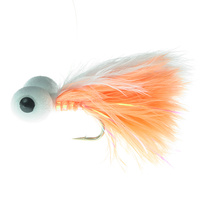
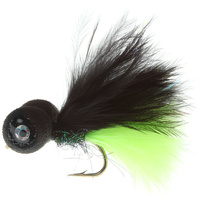
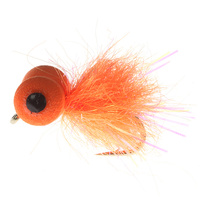
Booby Cocktail UV SLF Orange
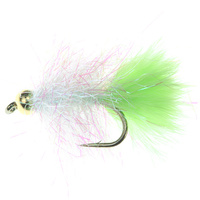
Blob Golden Bead UV Pearl and Chartreuse

Booby UV SLF Orange/Chartreuse Cocktail

Booby Yellow Eyes Coral Tail

Booby Chartreuse Eyes and Cactus White Tail

Booby Black Yellow Eyes
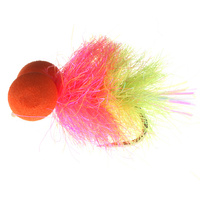
Booby UV SLF Coral/Chartreuse Cocktail

Booby UV SLF Coral Cocktail Fl Yellow

Booby Light Bright Black


Booby Chartreuse Cactus White
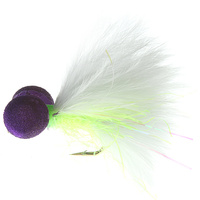
Booby Cat Straggle Purple Eyes
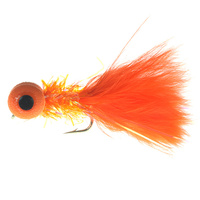
Booby Cactus Fire Orange
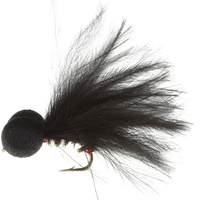
Booby Black Ribbed Red
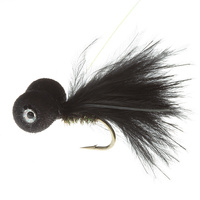

Blob UV Prism Pink with Peach Tail

Blob UV Prism Pearl Chartreuse Tail

Blob UV Prism Fl. Orange

Blob SLF Pink Rubber Legs

Blob SLF Flashy Pink Fl. Yellow with Pearl Tail

Blob SLF Flashy Pink and Chartreuse
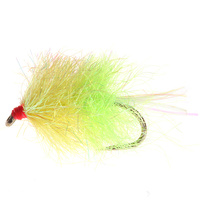
Blob SLF Flashy Fy Yellow and Chartreuse
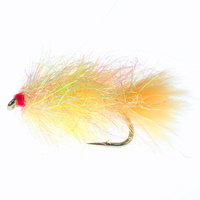
Blob Prism Peach Yellow

Blob Golden Bead Prism Yellow

Blob Golden Bead Prism Fl. Orange
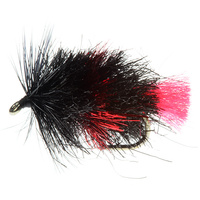
Blob Flashy Bibio with Red Tail
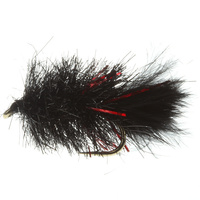
Blob Flashy Bibio with Black Tail
What is a Blob fly?
A Blob is a compact attractor, usually built around a bright or contrasting body. It does not need to imitate one named insect. Its value lies in visibility, colour contrast and the way the material pulses or changes shape during the retrieve. A Blob may be fished alone or, where rules permit, as part of a team with more imitative flies.
Choose colour in relation to light, water clarity and the other flies in the cast. A change from fluorescent to darker or more muted shades can be as significant as a change of retrieve. Bead-head versions add weight and alter the sink rate, while tail and flash details affect the silhouette.
What is a Booby fly?
A Booby has a buoyant front section, most visibly a pair of foam eyes. On a floating line it can be worked at or near the surface. With an appropriate sinking line, the line descends while the buoyant fly rises above it, producing a presentation close to the bottom whose height depends on leader length and buoyancy.
How to fish Blobs and Boobies responsibly
Fishery regulations may restrict fly numbers, line arrangements, buoyant flies or the way they are retrieved. Check the local rules before fishing. Use tackle that gives adequate control and avoid leaving an unattended or slack presentation in a situation where takes may be difficult to detect.
Choosing between them
- Choose a Blob when you want a conspicuous attractor whose depth can be controlled by its weight, line and retrieve.
- Choose a Booby when buoyancy itself is central to the presentation.
- Use the product construction—not colour alone—to determine how the fly is likely to behave.
- Record line density, leader length, count-down and retrieve after a take so the successful presentation can be repeated.