
Fly-Tying Vices: Jaws, Rotation and Bench Mounting
( number of products: 60 )A fly-tying vice must hold the hook without slipping or rotating while leaving clear access to the tying area. Begin with the range of hook sizes and wire diameters, then compare jaw construction, clamping mechanism, rotation and attachment to the bench.
Small dries and midges need precise access, large streamers require greater clamping reserve, and tube flies use dedicated pins or heads. Rotation may simply help inspect the fly or may align the hook shank for true rotary tying.
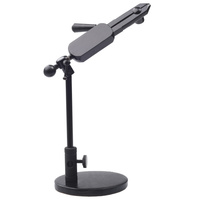
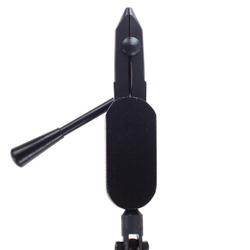

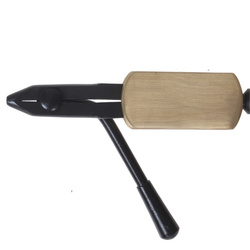

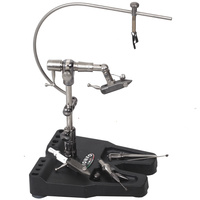
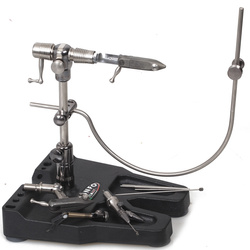
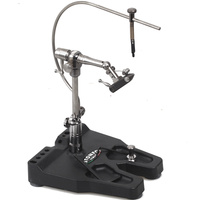

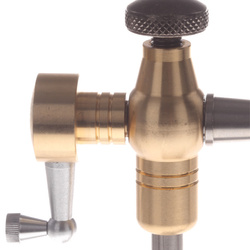

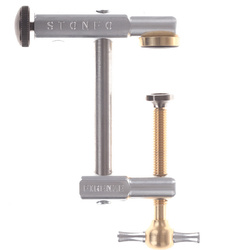

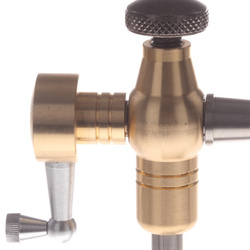
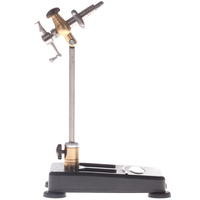
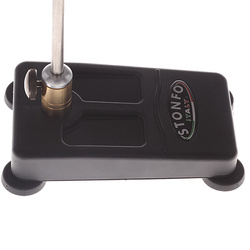
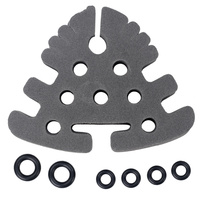
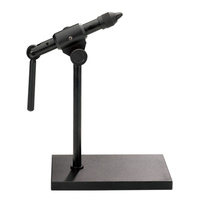

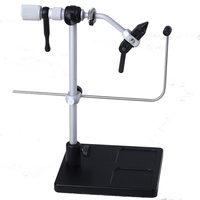


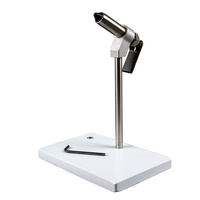

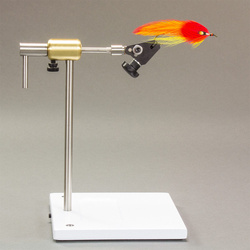


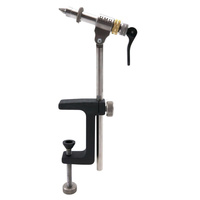
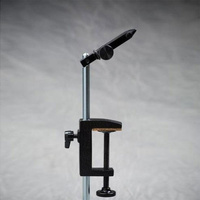
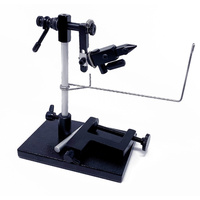

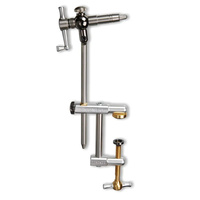




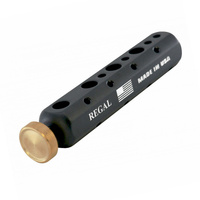
Regal Medallion Fly-Tying Vise with Traditional Jaw and Bronze Traditional Base

- 1
- 2
What a vice must do
The hook should remain stable under normal tying pressure, thread torque and material tension. The point and barb should not contact the jaws, and the hook eye, bend and working shank must remain accessible. Stability comes from jaw geometry, correct adjustment, sound mounting and sensible hook placement.
Jaw types
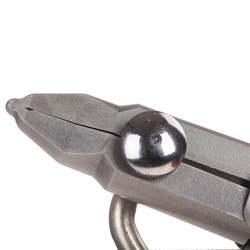
Standard jaws cover a practical range of trout and general hooks. Midge jaws taper more finely for access around small hooks but have less material to resist extreme loads. Streamer or saltwater jaws provide contact and strength for larger heavy-wire hooks. Tube-fly heads and pins support tubes without pretending that the tube is a conventional hook.
No single jaw is ideal from the smallest midge to the heaviest predator hook. Check the manufacturer's stated range and use replaceable jaw sets where the work genuinely spans both extremes.
Clamping mechanisms
A screw-adjusted cam lever sets jaw spacing and then closes with repeatable action. A direct screw clamp increases pressure progressively. Spring jaws open against their own tension for quick insertion. Each can work well when matched to the hook and adjusted correctly.
Do not use maximum force automatically. Excess pressure can mark fine wire, damage the jaw tip or launch a hook when released.
Fixed, rotating and true rotary
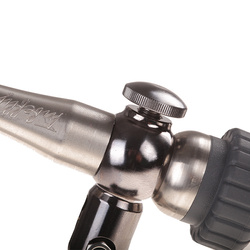
A fixed head holds one working angle. A rotating head turns the fly for inspection and access to the far side. In a true-rotary arrangement, the hook shank can be aligned with the axis of rotation so that materials are wound with the hook turning while the bobbin remains relatively stationary.
True rotary does not make every operation easier. It is valuable for even bodies, ribbing and viewing, but precise alignment and material control are still required. A good fixed vice remains fully capable of producing excellent flies.
Pedestal or C-clamp?
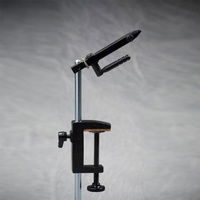
A heavy pedestal moves with the vice, protects furniture from a clamp and is convenient where table edges vary. Its stability depends on base mass, footprint, stem height and the force used. A C-clamp fixes directly to a suitable bench and can be very rigid, but requires compatible edge thickness and a surface that will not be damaged.
For travel, compare packed size, base mass, clamp range and access to a suitable table. A compact clamp is lighter; a small pedestal is more independent of furniture.
Height, angle and handedness
Adjust the hook near a comfortable viewing height so that shoulders remain relaxed and wrists neutral. Head angle changes access beneath the shank. Controls should remain reachable by the working hand; some vices can be reconfigured for left-handed use.
Practical selection scenarios
- General trout flies: standard jaws, stable base or clamp and useful inspection rotation.
- Midges and small dries: fine jaw profile and clear space around the eye.
- Large streamers: strong jaws, rigid mounting and enough clearance for long materials.
- Tube flies: dedicated pins or a tube head sized for the tubes.
- Rotary body work: an adjustable axis and smooth rotation with controllable resistance.
Securing a hook
- Select jaws intended for the hook size.
- Place the hook in a supported area of the jaw, not at the extreme tip.
- Keep point and barb outside the contact surfaces.
- Adjust the mechanism, then close it with controlled force.
- Test the hook with moderate hand pressure before tying.
Accessories
Material clips, bobbin cradles, profile plates, waste baskets, magnifiers and tool racks improve organisation but do not correct unstable jaws. Confirm stem diameter and model compatibility before adding an accessory.
Frequently asked questions
Is a rotary vice better than a fixed vice?
Not automatically. Rotation is useful for inspection and some tying techniques; jaw quality, stability and access remain more fundamental.
Will one jaw hold every hook?
No. Extreme differences in size and wire normally require specialised jaws.
Why does the hook rotate in the jaws?
Common causes are incorrect placement, insufficient or uneven adjustment, unsuitable jaw size, worn contact surfaces or excessive tying force.