
Fly reels: choosing size, drag and line capacity
( number of products: 26 )A fly reel stores fly line and backing, helps balance the rod and provides controlled resistance when a fish takes line. Choose its size from the real volume of the line, the required backing and the complete outfit's balance. A marking such as #5/6 or #7/8 is the manufacturer's guide to intended capacity; it is not a separate AFFTA class or a universal reel-size standard.
A simple, smooth mechanism can be entirely suitable for light trout fishing. As tippet becomes finer or fish make longer runs, capacity, low start-up resistance, retrieval rate and drag consistency become more important. Saltwater, salmon and predator fishing also place greater demands on frame stiffness, corrosion protection and routine care.

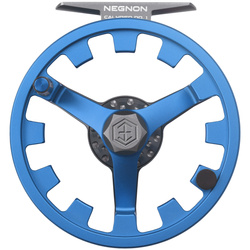








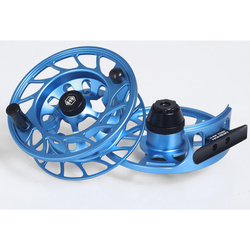
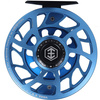


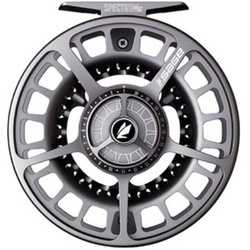


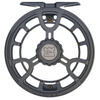



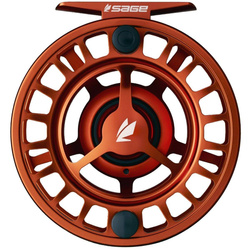

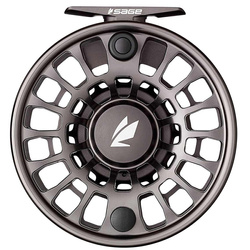


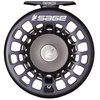


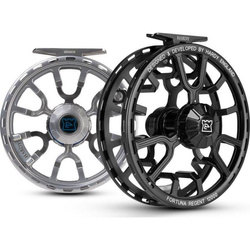



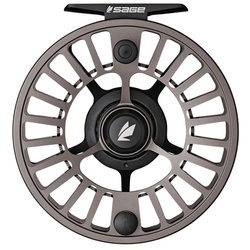

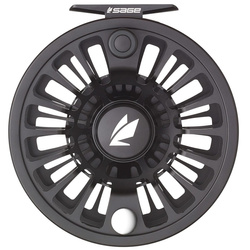

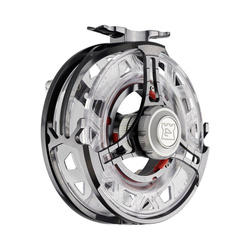
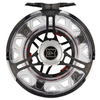


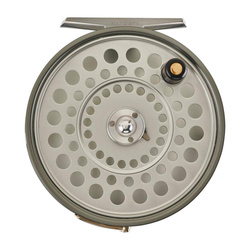

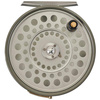




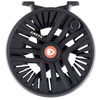

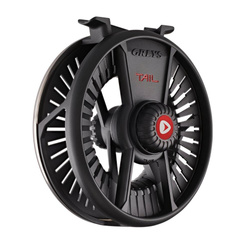
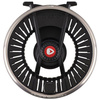

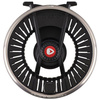



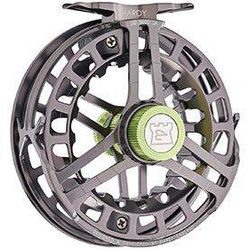


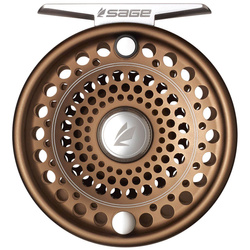
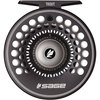


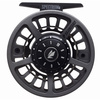
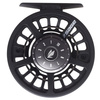
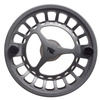

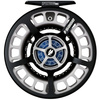
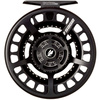
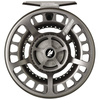

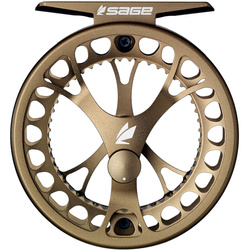
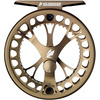
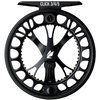


Choose the reel around the line and rod
Start with the fly line. Check its line weight, total length, head profile and volume, then decide how much backing of a particular diameter is required. Only then compare reel mass, drag construction and frame design. Two lines carrying the same nominal number may occupy different amounts of spool space, so a general #5/6 label does not replace a capacity table for the exact reel.
The best reel is not necessarily the smallest or lightest. It must hold the full system without rubbing the frame, fit the reel seat, feel comfortable on the rod and provide the drag control required by the fishing. In a light river outfit it may work mainly as line storage. In salmon or saltwater fishing it becomes a more active part of controlling the fish.
What do reel sizes such as #3/4, #5/6 and #7/8 mean?
The printed range indicates the line weights for which the manufacturer intended the reel's capacity and mass. A #5/6 reel will commonly accept a #5 or #6 line with a stated allowance of backing. The numbers are not fractions and do not certify compatibility with every line of those classes.
Reel numbering cannot be compared blindly between brands. One company may use #5/6, another a four-digit size and another its own series numbers. Spool depth and width may also change between models of the same brand. Check three facts on the individual product: capacity for the intended line and backing, reel mass and compatibility with any spare spool.
Typical starting points
| Application | Common line range | Capacity and balance | Useful construction |
|---|---|---|---|
| Small streams and dry flies | #2–#4 | Low mass and proportion for a light rod | Click check or a light disc drag |
| General trout fishing | #4–#6 | WF line, suitable backing and comfortable balance | Smooth drag with moderate adjustment |
| European nymphing | #2–#4 | Balance for a long rod and control of fine line | Full frame or enclosed line guard |
| Stillwater and several lines | #5–#8 | Room for floating and sinking line profiles | Spare spools or a cassette system |
| Pike and streamers | #7–#10 | Bulky head, faster retrieval and backing reserve | Stable disc drag and a stiff frame |
| Switch and double-handed | match the system | Head, running line, backing and rod balance | Full frame is useful with thin running line |
| Salmon and saltwater | #7–#12 and above | Substantial backing reserve and rapid retrieval | Powerful, smooth, protected drag |
These are starting points. A Spey head and running line, a thick pike taper and a conventional WF line with the same nominal number can occupy very different spool volumes.
Spool capacity and backing
Backing provides reserve line during a long run and fills the spool so that the fly line is retrieved around a useful diameter. Capacity figures normally specify a fly line and a length of backing at a stated strength. They remain approximate because backing diameter, line profile and winding tension alter the result.
Leave a small clear margin below the spool rim once the complete system is fitted. Overfilling can make line rub against the frame or jam; severe underfilling reduces retrieval per turn. A practical way to establish backing quantity is to wind the fly line onto an empty spool first, add backing to the required level and then reverse the complete system onto the working spool.
What does a large-arbour spool do?
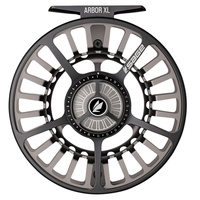
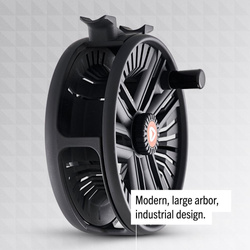
A large-arbour spool has a broad central core. It retrieves more line per handle turn than a smaller core at the same rotational speed and stores line in wider coils. The larger effective diameter also changes less dramatically as a fish takes line, helping the drag feel more consistent through the run.
Large arbour does not automatically mean greatest capacity. Capacity depends on the outer diameter, core diameter, width and depth together. A very large core requires a correspondingly larger reel if it is to carry the same backing reserve. Always compare the design name with the actual capacity table.
Click check or disc drag?
A click-and-pawl mechanism uses a pawl against a toothed wheel. It provides light resistance, an audible check and protection against uncontrolled spool overrun. For light fishing it can be sufficient, with additional pressure applied by hand to the spool rim when required.
A disc drag creates resistance across friction surfaces and allows adjustment through a control knob. With fine tippet, smooth start-up is more important than headline maximum force: a sharp increase as the fish starts to run can overload the tippet. Larger fish also make repeatability, heat management and adjustment range more relevant.
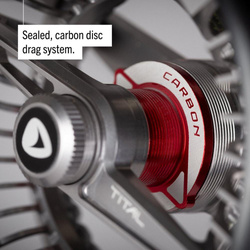
A protected or sealed drag is designed to reduce the entry of water and contamination. The term does not make the reel maintenance-free or suitable for storage while wet. Follow the care instructions for the exact model.
Full frame or open frame?
Open, ported frames reduce material and provide easy spool access. Very thin running lines, European-nymph lines and leader-only systems can expose the importance of the gap between frame and spool. A full frame or enclosed line guard reduces the chance of these fine components entering that gap.
This is especially useful in European nymphing, switch and Spey systems. A full frame alone does not prove quality; alignment, frame stiffness, edge finish and spool clearance still need to be appropriate.
Balancing the rod
Reel mass changes how an outfit feels, but there is no single mandatory balance point. A static finger test is only a guide because line moves beyond the guides during fishing. Too much reel mass adds unnecessary weight; too little may make a long rod feel persistently tip-heavy.
Short dry-fly rods often benefit from a light reel. A long European-nymph rod, switch rod or double-hander may be more comfortable with additional mass behind the hand. Judge the assembled rod with line and backing fitted and hold it in the working position for several minutes.
Stillwater, European nymph and powerful outfits
European-nymph anglers benefit from a broad core, smooth edges and a frame that controls fine line. Do not automatically select the smallest reel because the rod is marked #2 or #3; rod length creates leverage and may call for more counterbalancing mass.
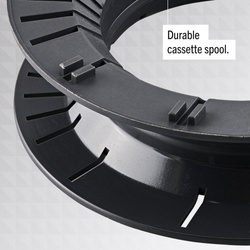
Stillwater fishing may require floating, intermediate and several sinking lines. Spare spools or cassette systems allow line density to change without rewinding. A spare spool must fit the exact reel model, size and sometimes generation; matching line-weight labels do not guarantee mechanical compatibility.
Pike, salmon and saltwater outfits require room for bulkier lines and more backing, reliable retrieval and a drag suited to stronger fish. Salt attacks finishes, fasteners, bearings and drag components. Rinse the reel gently with fresh water as directed by its manufacturer and allow the frame, spool, line and backing to dry.
Materials, retrieve direction and care
Frames and spools may be machined from aluminium, cast from an alloy or made from a composite. Manufacturing method alone does not determine quality. Design, material grade, fit, surface protection and parts support matter together.
Many reels can be converted between left- and right-hand wind, but the procedure varies. It may involve reversing a one-way bearing or rearranging additional parts. Use the manufacturer's instructions rather than forcing the mechanism. Before fishing, check that line leaves the lower part of the spool towards the first guide and that drag resistance increases in the correct direction.
- Rinse salt, sand and silt with a gentle flow of fresh water where the instructions permit.
- Do not drive contamination deeper into the mechanism with high pressure.
- Dry reel, line and backing before closing them in a case.
- Inspect the reel foot, handle, screws, frame edges and drag operation.
- Do not apply an unsuitable lubricant to a closed drag system.
- Back the drag off for long storage unless the manufacturer states otherwise.
Frequently asked questions
Does the reel affect casting?
It does not load the rod as the fly line does, but its mass affects balance and fatigue. A poor match can make the outfit feel tip-heavy or unnecessarily cumbersome.
Do trout require a powerful drag?
Usually smooth operation and low start-up resistance matter more than maximum force. Many river trout are fought without reaching the backing, although a reliable drag still protects fine tippet.
How much backing should be fitted?
Use enough to provide the required reserve while leaving clearance below the rim after the complete fly line is installed. Begin with the manufacturer's capacity figure and adjust for the actual backing diameter and line profile.
Will a #5/6 reel fit a #5 rod?
Often, provided that it holds the intended line and backing, fits the reel seat and balances the rod. The printed size remains a manufacturer guide, so check capacity and mass.
Is a spare spool universal?
No. It must match the exact model, size and sometimes generation. A similar diameter or line rating is not enough.
Build the complete outfit by comparing fly rods, fly lines and backing together. Choose the method and line first, then capacity and drag, and finally assess balance with the assembled rod.
This guide explains stable selection principles. Exact capacity, mass, drag construction, materials and spare-spool compatibility remain in the individual product specifications.