
Fly-Fishing Tippet, Tapered Leaders and Backing — How to Choose
( number of products: 54 )A leader transfers energy from the fly line to the fly, while its fine terminal section controls presentation and the available margin of strength. The X rating describes the diameter of a leader tip or tippet material: the higher the number before X, the finer the material. As a quick reference, 3X is about 0.20 mm, 5X about 0.15 mm and 7X about 0.10–0.11 mm.
This section includes fly-fishing tippet, tapered leaders, strike indicators, fly-line backing and leader and line accessories. Use the table below to compare X sizes with their nominal diameters in inches and millimetres.



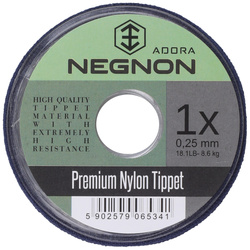

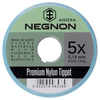
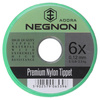

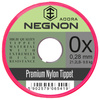

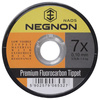
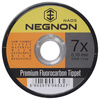
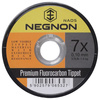
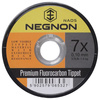
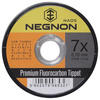
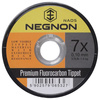
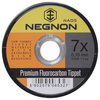
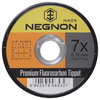
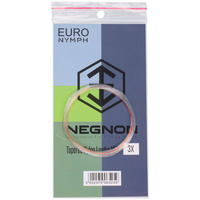





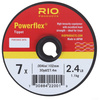
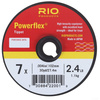
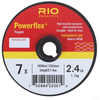


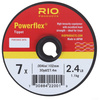
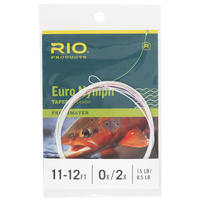









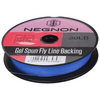

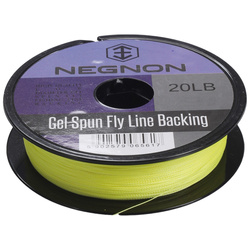

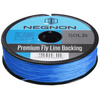
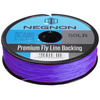
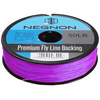
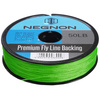












- 1
- 2
How is a complete fly-fishing setup arranged?
Working from the reel towards the fly, the usual order is backing, fly line, leader, tippet and fly. Backing fills part of the spool and provides reserve line when a fish runs beyond the fly line. The mass of the fly line loads the rod and carries the cast. The leader dissipates that energy, while the fine tippet provides the final connection and allows the fly to move more freely.
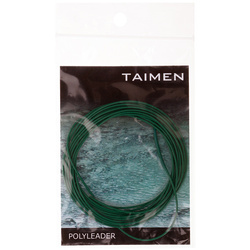
Tippet sold on a spool is not the same thing as a ready-made tapered leader. It has a constant diameter and is used to renew the terminal section of a leader, build a knotted leader from several diameters, tie droppers or construct a specialist nymphing setup. A tapered leader already changes from a thick butt section near the fly line to a fine tip near the fly.
X size and tippet diameter chart
| X size | Diameter (in) | Diameter (mm) |
|---|---|---|
| 0X | 0.011 in | 0.279 mm usually labelled 0.28 mm |
| 1X | 0.010 in | 0.254 mm usually 0.25 mm |
| 2X | 0.009 in | 0.229 mm usually 0.23 mm |
| 3X | 0.008 in | 0.203 mm usually 0.20 mm |
| 4X | 0.007 in | 0.178 mm usually 0.17–0.18 mm |
| 5X | 0.006 in | 0.152 mm usually 0.15 mm |
| 6X | 0.005 in | 0.127 mm usually 0.13 mm |
| 7X | 0.004 in | 0.102 mm usually 0.10–0.11 mm |
| 8X | 0.003 in | 0.076 mm usually 0.08 mm |
The X system is primarily a diameter system, not a breaking-strain scale. For sizes 0X to 8X, subtract the X number from 11 to obtain the nominal diameter in thousandths of an inch. For example, 11 − 5 = 6, so 5X is 0.006 inch.
Manufacturers may round the metric value differently or specify a slightly different actual diameter. The millimetre figure shown for the product variant therefore takes precedence when making a precise comparison. Breaking strain must also be checked separately: two 5X materials can share a nominal diameter but differ in tensile strength, stiffness, knot performance and abrasion resistance.
How does a tapered leader work?
A tapered leader does not have one diameter throughout its length. The thick butt section accepts energy from the fly line, the middle taper carries it forwards and the fine tip allows the fly to land and move with less restriction. This progressive change in diameter turns over more smoothly than a long length of level monofilament.
A 4X or 5X marking on a leader packet refers to the terminal diameter, not the thick end attached to the fly line. Repeated fly changes gradually shorten that fine section. Adding fresh tippet of the same or a finer diameter preserves the designed taper for longer.
Which leader length should you choose?
- 7.5 ft, about 2.3 m: easier turnover with larger flies, wind, confined streams and limited casting room.
- 9 ft, about 2.7 m: a versatile starting point for many trout setups.
- 12 ft, about 3.7 m: separates the fly farther from the fly line and can aid delicate presentation, but asks more of the cast.
- 15 ft, about 4.6 m: found in specialist leaders including some Euro-nymphing designs; it is chosen for the method, not simply because fish are wary.
Length cannot be considered in isolation. A very long, fine leader may struggle to turn over a heavy nymph rig or large streamer, while a short, heavy leader can compromise the presentation of a small dry fly.
Nylon or fluorocarbon?
Nylon is generally more elastic and is available in both supple and stiffer formulations. Stretch can cushion sudden loads, while a supple terminal section may allow a small fly to move more freely. Exact properties still depend on the individual material and diameter.
Fluorocarbon is denser than nylon and tends to break through the surface more readily, which often makes it useful for nymphs, wet flies and streamers. It is also selected where abrasion resistance matters. It should not be described as invisible: it still has a physical diameter, refracts light, casts a shadow and can be detected under some conditions.
Nylon is usually the first choice for dry-fly tippet, especially when the terminal section should remain in or on the surface film. Fluorocarbon is often practical below the surface. In either case, stiffness, knot quality, diameter and presentation matter as much as the material name.
How should tippet match the fly and method?
- Small dry fly: use a fine, supple tippet, but no finer than presentation and fish size require.
- Nymph: balance diameter against fly weight, current speed and target depth; a coloured sighter section can assist in Euro nymphing.
- Streamer: choose a heavier tippet that can turn over the fly and tolerate a firm strike.
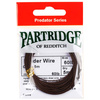
- Pike: add a purpose-made bite-resistant wire or leader material; ordinary trout tippet is not a bite trace.
- Clear, calm water: a longer and finer terminal section may help, provided it still permits a controlled, responsible fight.
What does backing do?
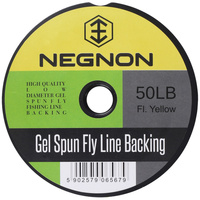
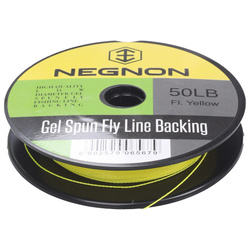
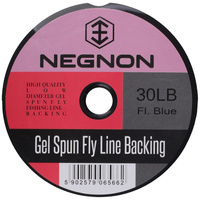
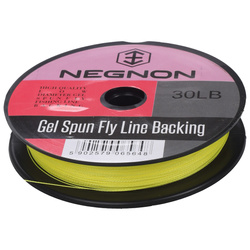
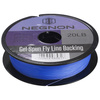
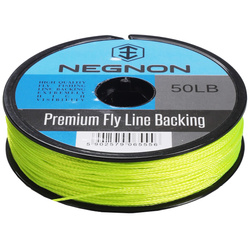
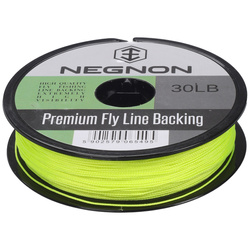
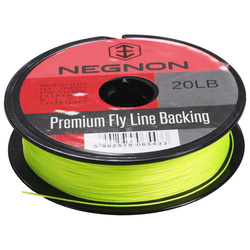
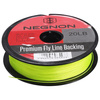
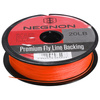
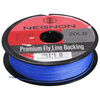
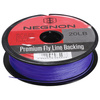
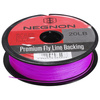
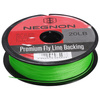
Backing is wound onto the spool before the fly line. It fills spool capacity, increases the effective arbor diameter and provides reserve line when a fish runs beyond the fly line. Ratings such as 20, 30 or 50 lb describe nominal breaking strain, not diameter or the required length.
The amount required depends on the reel capacity, the bulk of the fly line and the diameter of the backing. Thin gel-spun backing can provide more capacity, but it demands secure knots and careful handling. Do not overfill the spool: the fly line must rotate without rubbing the reel frame.
Frequently asked questions
Does 5X always mean 0.15 mm?
Nominally, 5X is 0.006 inch or 0.152 mm, which is commonly labelled 0.15 mm. Rounding varies at other sizes, so check the stated diameter of the exact product.
Does an X rating tell me what size of fish I can land?
No. X identifies diameter. The safety margin also depends on the material, stated breaking strain, condition of the tippet, knots, drag setting and the water being fished.
Must a tapered leader be replaced as soon as its tip becomes shorter?
Not necessarily. Fresh tippet can be tied to the remaining leader. Replace the leader when too much of the taper has been lost, or when it is abraded, cloudy, badly coiled or no longer turns the rig over properly.