
Fly-Fishing Vests: Fit, Pockets and Load Distribution
( number of products: 7 )A well-organised fly-fishing vest is a working surface carried on the body. Fly boxes, leaders, nippers, forceps and fly treatments remain accessible without returning to the bank or removing a backpack whenever the rig changes.
Do not choose by pocket count alone. Pocket size and arrangement, access when the vest is closed, load distribution and garment length matter more. A short vest remains useful during deeper wading; greater capacity helps when several fly boxes, spare leaders and an additional clothing layer must be carried.
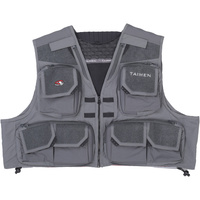
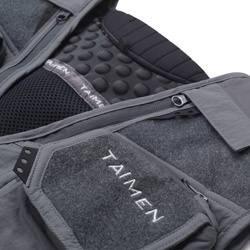
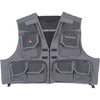
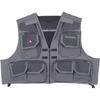

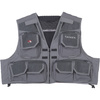
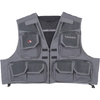
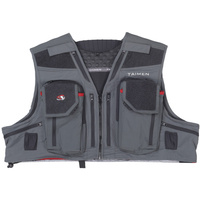
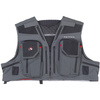
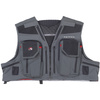
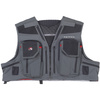
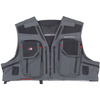
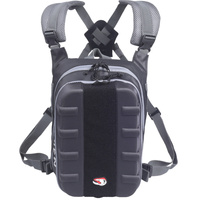


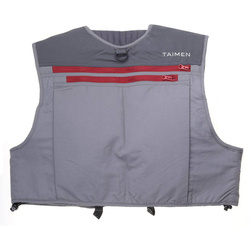
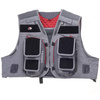
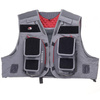
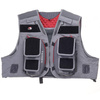
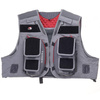
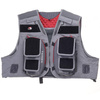

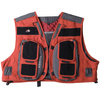
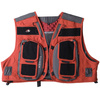
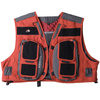
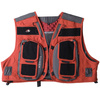
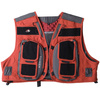
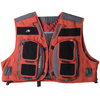
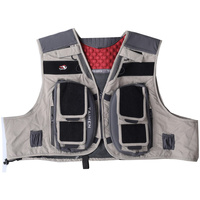
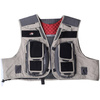


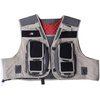


Do not count pockets: test what fits
Place the actual fly boxes and leader wallets against the pocket dimensions. A large pocket divided sensibly can be more useful than several small compartments. Bellows construction adds capacity but projects further from the body, while flat vertical pockets create a slimmer front and can be easier to reach with either hand.
Open and close every important pocket while wearing the vest. Zips, tabs and hook-and-loop fasteners should remain controllable with wet or cold hands. Keep exposed hook patches away from fly line and delicate clothing.
Short or long for wading?
A short vest keeps lower pockets above the water during normal wading and avoids covering the wader belt. A longer cut distributes pockets over more area and may carry larger items, but its lower section can become wet. Vest length should be judged with the intended waders, not with ordinary trousers alone.
No vest length makes deep water safe. Current, footing and a planned exit remain the limits.
Horizontal and vertical pocket layouts
Traditional horizontal chest pockets present fly boxes directly in front of the angler. They are easy to see but become bulky when overfilled. Vertical pockets can keep the front narrower and allow the arm to move across the body with less interference. Hybrid designs combine both approaches.
The best layout follows working sequence: flies and tippet on the dominant side, forceps and nippers where either hand can reach them, less-used reserves at the rear or inside.
Load distribution
A vest spreads equipment across the torso, but too much weight at the front pulls on the neck and shoulders. Divide dense items between left and right sides. Water, large spare boxes and clothing often belong in a rear compartment or separate pack rather than in one chest pocket.
Adjust shoulders and side straps so that the vest does not swing during casting but still fits over the thickest intended layer. The collar should not press on the neck, and the arm openings should permit a full casting stroke.
A simple arrangement that works
- Put the fly box used most often in the easiest pocket.
- Keep tippet spools in order of diameter.
- Attach nippers and forceps on short retractors without crossing them.
- Carry floatant and drying material upright in a compatible pocket.
- Place licences, keys and electronics in an independent waterproof pouch.
- Use the rear compartment for light bulky items rather than dense tools.
Attachment points and rear storage
D-rings, fabric loops and retractor tabs are designed for different loads. A landing-net ring needs a secure connection and often a separate safety lanyard. Do not pierce a waterproof jacket indiscriminately with a pin-mounted accessory.
A rear pocket can carry a light shell, food or small hydration reservoir where the design supports it. Check whether it can be reached while the vest is worn and whether the load conflicts with a backpack.
Vest or chest pack?
A vest distributes many small items and gives immediate access to several pockets. A chest pack concentrates a smaller working kit and can be moved around the body. The pack may leave more freedom to change outer layers; the vest often organises a larger number of tools without stacking them.
Choose according to required capacity and how often items are changed. Some anglers combine a compact vest with a backpack, but overlapping straps and pockets must not restrict movement.
Water resistance
A water-repellent surface treatment helps light rain bead on the fabric. It does not make the vest waterproof or make its pockets safe for electronics. Immersion will wet most vests and their contents. Protect vulnerable items separately.
Trying on a vest
- Wear the jacket and mid-layer used most often.
- Load the principal pockets with real boxes and tools.
- Close and adjust the vest without compressing the layers.
- Raise the arms, imitate a cast and reach every working pocket.
- Check visibility of the feet, access to the wader belt and clearance around the neck.
- Walk with the loaded vest and correct any front-heavy imbalance.
For a smaller concentrated carrying system, compare chest packs and fishing bags.