
Damsel nymph flies for stillwater trout
( number of products: 15 )Damsel nymph flies imitate the mobile aquatic stage of damselflies. Slim bodies, prominent eyes, marabou or other soft tails and olive, brown or brighter attractor colours create a pattern suited to weed beds, margins and shallow stillwater structure. Beads and flashbacks provide different sink rates and levels of visibility.
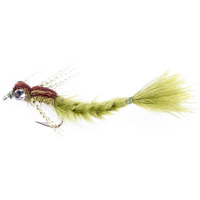
Damsel Wowen Tail Olive
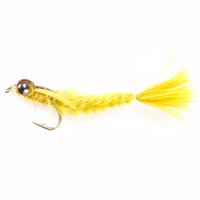
Damsel Wowen Tail Lt. Olive
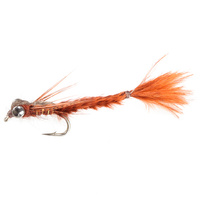
Damsel Wowen Tail Brown

Damsel Mini Pearl Ribbed Olive


Damsel Light Bright Orange

Damsel Light Bright Olive

Damsel Krystal Flash Back Olive

Damsel Krystal Flash Back Lt. Olive
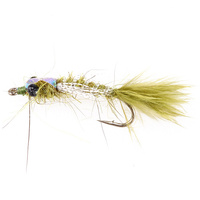
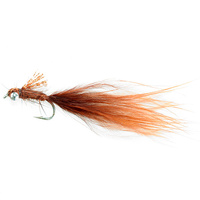
Damsel Krystal Flash Back Brown
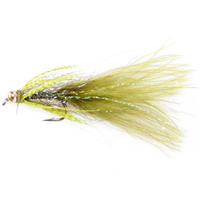
Damsel Galden Bead Olive with Krystal Flash
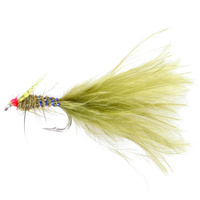
Damsel Flash Back Olive


Damsel Fl. Orange Bead Olive

Damsel Fl. Green Bead Lt. Olive
Where to fish a damsel nymph
Natural damselfly nymphs live around vegetation and move through the water before climbing out to emerge. Weed edges, reed beds, shallow bays and the margins of drop-offs are therefore sensible places to begin. The imitation does not have to be retrieved continuously: pauses can allow soft materials to settle and move with the water.
Choosing a damsel pattern
- Natural olive and brown shades provide an imitative starting point in clear water and around weed.
- Marabou and soft fibres create movement at low retrieve speeds; an oversized tail can foul around the hook, so inspect it regularly.
- Flashbacks and bright beads add a visible trigger and may help in coloured water or when a searching approach is required.
- Weighted and bead-head versions reach depth faster, while lightly dressed flies suit shallows and slower presentations.
Retrieve and depth control
Use short, controlled pulls, a steady figure-of-eight or a combination of movement and pause. The line should keep enough contact to detect a take without dragging the fly continuously upward. If weed is present, choose the minimum weight needed to enter the fishing zone rather than forcing the pattern into the bottom.
Damsels beyond the exact hatch
A damsel nymph can remain useful when no emergence is visible because its form also works as a general mobile prey pattern. That does not mean every olive lure is a damsel imitation. The slim body, eyes, tail movement and chosen retrieve work together to create the suggestion.
After a take or contact with vegetation, check the hook point and tail. A small strand of weed or a fouled marabou tail can change both hooking ability and the way the fly swims.