
Specialist Fly-Tying Tools
( number of products: 119 )Specialist fly-tying tools solve precise, repeated operations: gripping hackle, twisting a dubbing loop, aligning hair, applying adhesive or finishing a detail. Select the tool for the material and scale of fly rather than assuming that one design covers every task.
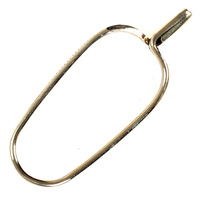
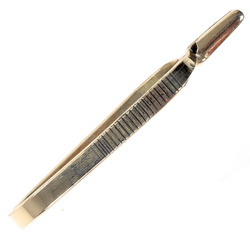
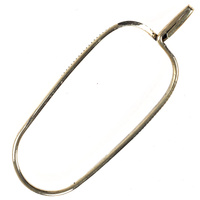
- Hackle pliers grip feather stems and other narrow materials.
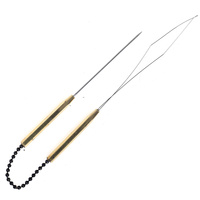
- Dubbing twisters close and spin dubbing loops.
- Bodkins, stackers and other tools assist preparation and finishing.
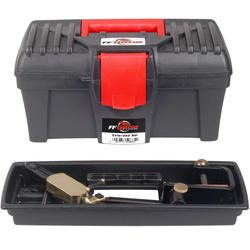
- Tool sets group the essentials for a new or portable bench.






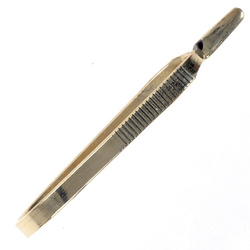


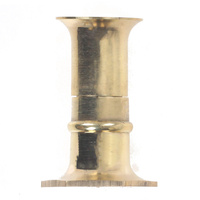


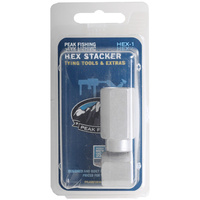
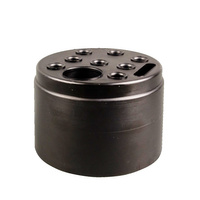
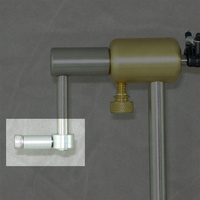





Hackle pliers
Hackle pliers should grip a stem securely without cutting or crushing it. Small smooth jaws suit fine dry-fly hackle; broader or rubber-lined contact can control larger feathers and slippery materials. The spring and handle should allow the feather to rotate without repeated regripping.
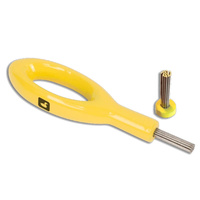
Dubbing twisters and loop tools
A dubbing loop traps loose fibres between two thread legs. A twister closes and spins the loop into a durable brush. Hook, clip and multi-arm designs provide different access and control. Spread material evenly before spinning and stop before excess twist damages the thread.
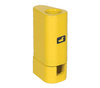
Hair stackers
A stacker aligns natural hair tips for regular wings and tails. Remove underfur first, place the tips in the tube and tap on a firm surface. Stacking is not obligatory: a streamer may benefit from naturally staggered ends, while a dry-fly wing often needs a more even edge.
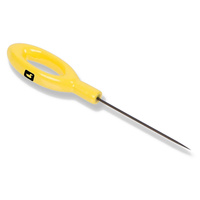
Bodkins and dubbing needles
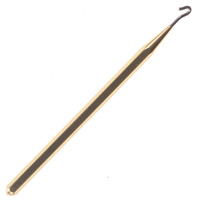
A bodkin separates fibres, clears hook eyes, applies a small amount of varnish or adhesive and releases trapped dubbing. It should be fine enough for the work and cleaned before cured resin builds up. A needle is a placement tool, not a lever for forcing hardened material.
Brushes, combs and material clips
Brushes and combs remove underfur, open dubbing and release trapped fibres. Material clips keep long hair and hackle clear while a body or head is finished. Use a brush suited to the strength of the material; aggressive metal teeth can pull out a delicate body.
Tool sets
A set is convenient when its contents match the intended work. Check the individual tools, not only the case. A practical core normally includes scissors, a bobbin holder, a finishing tool, a bodkin and hackle pliers; the vice may be included or purchased separately.
How to judge a specialist tool
- Does its contact surface hold without damaging the material?
- Can it reach the working area around the intended hook size?
- Does it operate under useful thread tension?
- Can resin, wax or fibres be removed without damaging it?
- Does it solve a repeated operation more consistently than the tools already owned?
Care
Remove adhesive before it cures, keep joints free from resin and store fine points protected. Do not use fly-tying scissors to cut wire. Inspect jaws and ceramic or polished contact surfaces whenever unexplained material breakage begins.