
Daddy-longlegs and hopper flies
( number of products: 20 )Daddy-longlegs and hopper flies suggest large terrestrial insects that have reached the water. Long legs, segmented bodies, foam, hair and visible colour details create a recognisable outline and movement. The range includes floating, bead-head and subsurface variations, so the construction of each fly should guide the chosen presentation.
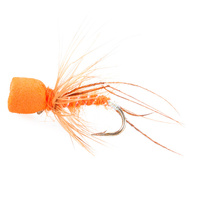
Bristol Hopper Popper Orange
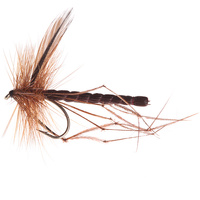
Dads Daddy long Legs Natural

Dady Long Legs Rubber Legs Olive


Dads Daddy long Legs Orange

Dads Daddy long Legs Chartreuse

Daddy Long Legs Tan Body

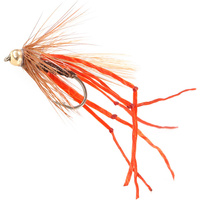
Daddy Long Legs Golden Beads Natural
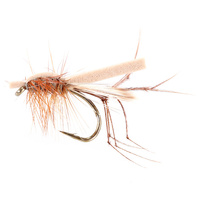
Daddy Long Legs Foam Body Natural

Daddy Long Legs CDC Loop Natural


Bristol Hopper V-Rib Body

Bristol Hopper Popper Claret / Black

Bristol Hopper Popper Black

Bristol Hopper Pale Olive

Bristol Hopper Golden Bead Orange

Bristol Hopper Golden Bead Black Red


Bristol Hopper Black Red

When daddies and hoppers become relevant
Warm weather, bankside vegetation and wind can bring crane flies, grasshoppers and other land insects onto lakes and slower river margins. Their arrival may be obvious, but these patterns also work as searching flies because their size and movement can draw attention from a distance.
Floating and subsurface versions
A foam or hair-bodied pattern may sit at the surface and create a distinct footprint. A bead-head or otherwise weighted version is intended to travel below it. Names alone do not always identify the depth, so examine the body, bead and hook before deciding how to fish the individual pattern.
Presentation
- Near banks and vegetation: place the fly close to a plausible entry point while leaving room for a controlled take.
- In a ripple: allow wind to move a floating pattern naturally, adding only occasional restrained movement.
- Subsurface: use short pulls, pauses or a slow figure-of-eight retrieve to animate legs without making the fly race unnaturally.
- As part of a team: position a larger pattern deliberately and ensure its weight and air resistance remain compatible with the leader.
Colour and visibility
Dark and natural bodies create a strong silhouette, while orange, red or fluorescent details can help the angler see a surface pattern or give a subsurface fly an attractor point. The best starting choice comes from the insects and light conditions present, not from a fixed rule that one bright colour always works.
Long rubber or knotted legs can tangle around the hook during casting. Check the fly after a missed take or contact with weed so that its profile remains open and the hook point is clear.