
Sinking Fly Lines – Choosing the Right Sink Rate
( number of products: 12 )A full-sinking fly line descends throughout its length and lets the angler retrieve a fly through a selected layer of water. The number following the letter S does not determine depth by itself. Countdown time, current, leader length, fly buoyancy and retrieve speed all affect the actual path of the rig.
The range includes intermediate lines and fly lines with different sink rates for stillwater, river and saltwater fishing. Compare the manufacturer’s rate in ips, head profile and the density of each section, especially on multi-density designs. For line weights and taper construction, see the main fly-line selection guide.
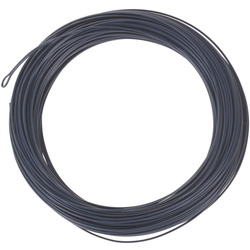




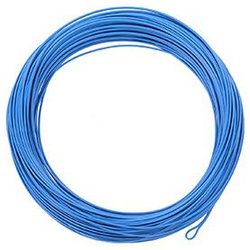











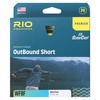
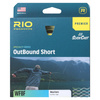
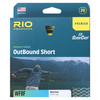
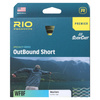

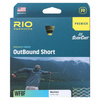


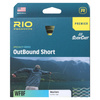

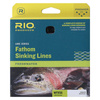
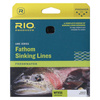



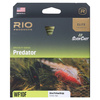

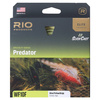


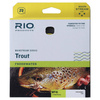
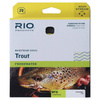

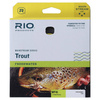


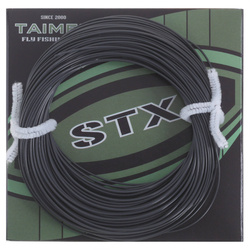

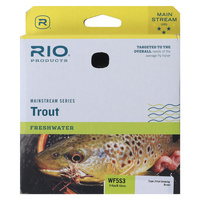

Intermediate, full-sinking and multi-density lines
An intermediate line sinks slowly and is used to retrieve a fly just below the surface or through a shallow layer without a floating section bowing above the submerged rig. A full-sinking line descends faster and along its complete length, making it suitable for fishing through middle and deeper layers.
On a multi-density line, successive sections have different sink rates. A well-matched density progression reduces uncontrolled hinging or bowing and helps maintain more direct contact with the fly. Names such as Comp, Hover, Intermediate, S3 and S7 must be read against the specifications of the particular manufacturer.
How to convert ips into centimetres per second
Ips means inches per second. One ips is 2.54 cm/s. As a quick comparison, 2 ips is approximately 5.1 cm/s, 3 ips is 7.6 cm/s, 4 ips is 10.2 cm/s, 5 ips is 12.7 cm/s, 6 ips is 15.2 cm/s and 7 ips is 17.8 cm/s.
These are nominal figures. Water temperature and density, line tension, current and retrieve style alter the real path of the rig. A sink-rate code is not a promise that the line will reach a particular depth after a fixed time.
How to choose a sink rate
- Immediately below the surface: an intermediate line retrieves a wet fly or small streamer in the upper layer without leaving a floating line above it.
- Mid-water: a moderately sinking line gives time for a controlled retrieve before it reaches the bottom.
- Deep water or faster current: a faster line shortens the time needed to reach the fishing zone, but demands more care during the lift and can catch the bottom more often.
- Fishing from a boat: depth, boat drift and retrieve direction all matter; the fastest line does not always provide the longest effective retrieve.
The countdown method – a repeatable depth reference
After the cast, allow the rig to sink and count the seconds before beginning the retrieve. If a take comes after an eight-second countdown, repeat a similar cast with the same line length and waiting time. Counting does not reveal the exact depth, but it creates a practical, repeatable reference.
A change in casting angle, current, leader length or fly weight calls for a new countdown. The useful information is therefore not simply “S5”, but the combination of line model, cast length, sink time and retrieve speed.
Leader and fly choice with a sinking line
A short leader helps keep the fly close to the line’s path. A long, fine leader may descend more slowly, while a foam or otherwise buoyant fly can ride above the line. A heavily weighted fly may travel below it. Treat the line, leader and fly as one system rather than using sink rate as the only variable.
Controlling and lifting a sinking line
Before the next cast, retrieve enough line to bring the fly closer and reduce the submerged length. Do not try to tear a deeply sunk line straight from the water with a full back cast. A controlled lift, a preparatory roll cast or gradually bringing the head to the surface reduces strain and sets up the next cast more cleanly.
After fishing in salt or dirty water, rinse the line according to the manufacturer’s instructions. Inspect the parts that pass most frequently through the guides. Cleaning products cannot repair cracks or damage that expose the core.
Full-sinking line or sink tip?
Choose a full-sinking line when the complete line needs to work below the surface and carry the rig through a defined layer. A sink-tip line keeps the rear section higher, making mends, angle control and lifting for the next cast easier.
Frequently asked questions
Does a faster-sinking line always fish deeper?
No. It can reach depth more quickly, but the final path depends on current, countdown, retrieve direction, fly and leader. A line that sinks too quickly may settle on the bottom before the effective retrieve begins.
Does an intermediate line float?
No. An intermediate line is slightly denser than water and therefore sinks slowly below the surface. Check the exact rate in the specification of the particular product.