
Fly-Fishing Strike Indicators — Types, Size and Rigging
( number of products: 10 )A strike indicator makes changes in a nymph rig easier to see and, in buoyant designs, helps control the depth at which the flies drift. Choose its size according to the weight it must support, current speed, casting distance and the amount of disturbance acceptable on the water.
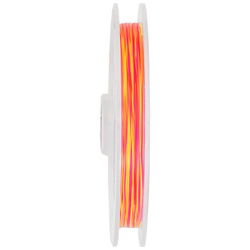
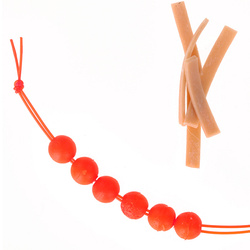
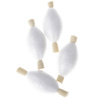
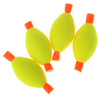
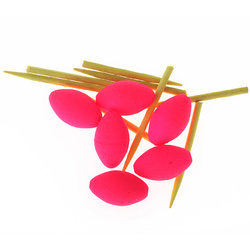
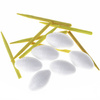
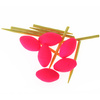
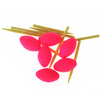
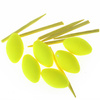
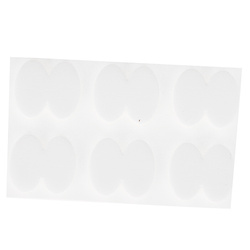
The range includes foam, ball and football-shaped indicators, peg or gasket-mounted models, stick-on indicators, glow options and coloured sighter materials for contact nymphing.





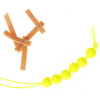
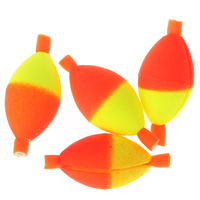
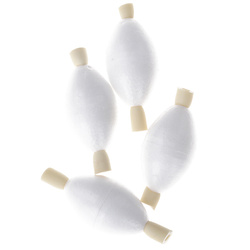





Buoyant indicator or coloured sighter?
A buoyant strike indicator sits on the surface and supports part of the rig. It can suspend nymphs at a chosen depth and provides a visible reference through the drift. A coloured sighter is a visible section of leader, usually used in Euro nymphing. It shows tension and movement but does not support the flies like a float.
The two systems answer different needs. A surface indicator suits suspended nymphing and repeated drifts at a controlled depth. A sighter suits direct leader control and contact methods. Some rigs combine visible leader material with another depth-control method, but extra components should always have a clear purpose.
How large should a strike indicator be?
Use the smallest indicator that remains visible and reliably supports the flies and added weight. An oversized indicator is easier to see but lands with more disturbance, creates greater air resistance and can make the rig harder to cast. A model that is too small repeatedly sinks or becomes difficult to track.
- Small indicators: light nymphs, short casts and quiet water where a gentle landing matters.
- Medium indicators: general river nymphing with moderate current and weight.
- Large indicators: heavy or multiple nymphs, fast or broken water and long-distance visibility.
Adjust size when the rig changes. Adding a heavier fly or split shot can turn a previously suitable indicator into one that sits too low or disappears during ordinary turbulence.
Foam, ball, peg and stick-on designs
Foam indicators are light and can be discreet in small sizes. Adhesive or stick-on versions minimise bulk, although they may be less convenient to reposition repeatedly. Ball and football-shaped indicators provide greater buoyancy and a clear silhouette in broken water.
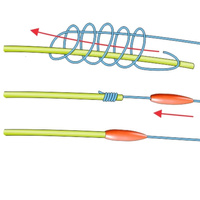
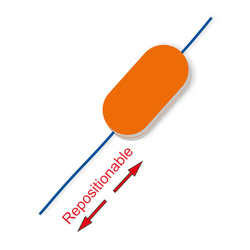
Peg and gasket-mounted indicators are designed for quick depth adjustment. Fit them without crushing or sharply bending the leader, and check that the mounting method grips securely on the diameter being used. Glow or high-visibility models are useful in poor light, but colour and brightness do not compensate for an unsuitable size.
How do you set depth?
The distance between indicator and fly is a starting point, not a fixed formula. It must account for water depth, current, fly weight and the angle between rod, line and indicator. In moving water the fly rarely hangs straight below the indicator, so the leader may need to be longer than the measured depth.
If the fly never approaches the target layer, lengthen the rig or add appropriate weight. If the indicator stalls and dives continuously from bottom contact, shorten the depth or reduce weight. Occasional contact can be useful; repeated snagging prevents a controlled drift.
Reading the drift
A take may appear as a stop, sideways movement, acceleration, lift or a subtle change in the indicator's angle. The same signals can also come from stones, weeds or a change in current. Respond consistently, then use repeated observations to distinguish the bottom from fish.
Watch relative speed. If the indicator races ahead of the subsurface current, drag is pulling the flies unnaturally. If it lags or forms a wake, another current may be acting on the line. Mending and rod position should correct the drift without repeatedly moving the flies.
Colour and visibility
Visibility depends on background as much as brightness. Orange may stand out against dark water, white can be clear in shade and a two-colour design makes rotation easier to detect. Carry contrasting colours and change when your eyes begin to lose the indicator.
A visible indicator is not automatically alarming to fish. Its size, impact, movement and distance from the fly can matter more than colour alone. In shallow, calm water, reduce mass and profile before sacrificing visibility completely.
Casting an indicator rig
An indicator, one or two weighted nymphs and added weight form a rig that can tangle if cast with a tight, fast loop. Use a more open, controlled stroke and allow the leader time to straighten. Avoid abrupt direction changes that bring the flies and indicator together.
After a tangle, inspect the leader. Kinked, flattened or cloudy monofilament may have lost strength even if it has not broken.
Frequently asked questions
Should every pause be treated as a take?
A positive response to an unusual movement is sensible, but constant bottom contact signals a rigging problem. Adjust depth or weight rather than relying on repeated strikes.
Can a sighter replace a floating indicator?
Not in every rig. A sighter makes leader movement visible but provides no meaningful buoyancy. The choice follows the fishing method and the type of depth control required.