
Fishing Waders: Fit, Construction and Care
( number of products: 16 )Breathable fishing waders keep external water out while allowing some water vapour produced during walking and fishing to pass through the laminate. They are a waterproof shell, not insulation: warmth depends on the base layers, insulating clothing and socks worn underneath. A good fit must allow a deep squat and a high step without pulling across the crotch or knees, yet should not leave large folds rubbing together as you walk.
Compare the laminate, seam placement and sealing, stockingfoot size, cut and entry system. Where documented figures are available for a particular Negnon product, they belong to that material and model. Taimen waders are described as offering high waterproofness and breathability without attaching unsupported laboratory figures to the range as a whole.

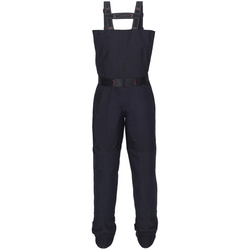
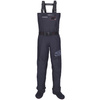
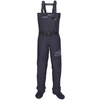
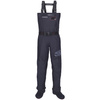

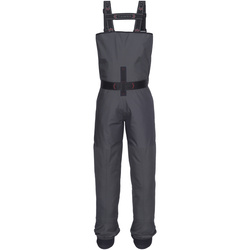
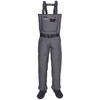
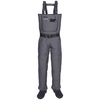
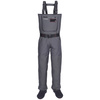
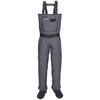
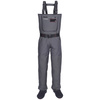



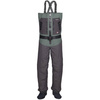




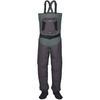
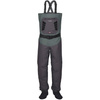
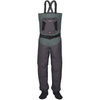


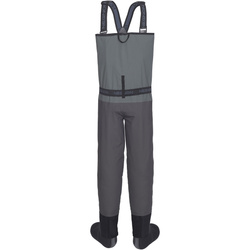


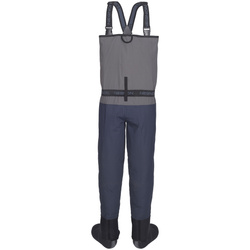


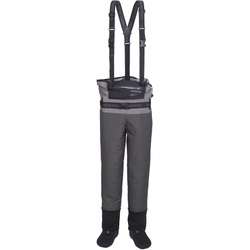


Taimen Menza Sonic Waders - Set
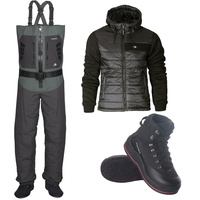
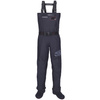
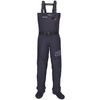
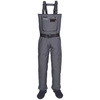
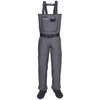
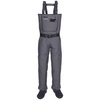
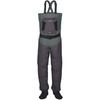
Wodery Taimen Menza TIZIP Sonic - Set

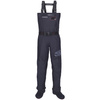
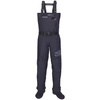
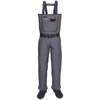
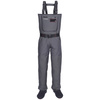
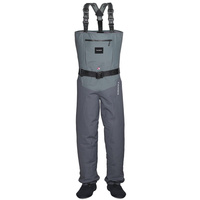
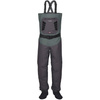
Taimen Orhon TIZIP Waders + Taimen Ongi

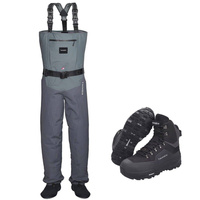

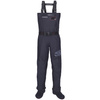
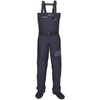
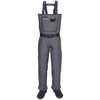
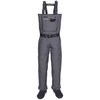
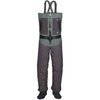
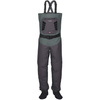
Taimen Chuluut Waders + Uchur Wading Boots
What are breathable waders?
Breathable waders are waterproof garments designed for standing and moving in water. Unlike rubber or PVC constructions, their laminate can transfer a proportion of water vapour. This does not mean that air flows freely through the fabric or that every drop of perspiration disappears. During a hard walk, the body can produce moisture faster than the material can move it.
The membrane is not a thermal layer. Waders separate the body from water, mud and wind; clothing underneath provides insulation. The same pair can therefore work in warm and cold conditions when its cut leaves appropriate space for changing layers without restricting movement or circulation.
Breathable, neoprene, rubber or PVC?
| Construction | Main characteristic | Typical use |
|---|---|---|
| Breathable laminate | Water barrier with controlled vapour transfer | Active fishing, walking and varied temperatures |
| Neoprene | Reduces heat loss but does not transfer vapour like a breathable laminate | Cold water and less active use |
| Rubber or PVC | Simple non-breathable water barrier | Shorter periods in water and limited walking |
No construction is ideal in every situation. During long, active days the practical benefit of a breathable laminate is reduced moisture accumulation. Appropriate thermal layers are still required in cold water.
Waterproofness belongs to the complete wader
Laminate waterproofness may be stated as a hydrostatic-head result in millimetres. This is a laboratory measurement of a fabric sample under a specified method. It does not, by itself, describe the watertightness of a finished pair or how long it will remain dry in use. Water pressure increases with depth, while kneeling, sitting and high steps place additional local stress on the garment.
Finished performance depends on the laminate, seam tape, the joins between legs and neoprene feet, crotch construction, any zip, fit and wear. A leg that is too short pulls on the crotch when the knee rises; excessive loose fabric creates folds that rub repeatedly. Product-specific figures should therefore be read alongside construction and fit, not treated as a ranking of entire brands.
Membrane, seam tape and outer finish
- The membrane or waterproof coating forms the main barrier within the fabric.
- Seam tape seals the needle holes created during construction.
- The face fabric protects the laminate from part of the mechanical wear.
- A durable water-repellent finish encourages water to bead and run off the surface; it is not the membrane and does not seal seams.
When the face fabric wets out, waders may feel heavier and colder and vapour transfer can fall. That does not automatically indicate a leak. Conversely, water beading on the surface does not prove that every seam, stockingfoot join or zip is sound.
What does breathability mean in waders?
Breathability is the ability of a material to transfer water vapour. Liquid sweat does not pass through a membrane as though through an opening: it must evaporate first, and conditions on both sides of the material must permit transfer. High humidity, a wet face fabric, cold water and intense activity can all reduce the effect felt by the angler.
Figures stated in g/m²/24 h come from a particular test. Results produced by different methods are not always directly comparable. A numerical value describes the tested material rather than every seam and component in the finished garment.
Immersion changes the conditions in which the laminate works. Vapour transfer may still occur, but a catalogue figure cannot predict its real rate under water. In practice the body can produce moisture faster than the system can move it. Suitable synthetic or wool layers spread moisture and move it away from the skin; they do not increase the membrane's laboratory performance.
Three-, four- and five-layer laminates – what do these terms mean?
The terms 3L, 4L and 5L refer to the construction of the laminate used to make waders. A typical three-layer laminate consists of an outer face fabric, a waterproof-breathable membrane and a thin knitted backer or scrim on the inside.
The inner scrim separates the membrane from clothing and helps spread moisture over a larger area. This makes condensed moisture less visible and less likely to form distinct droplets on the inner face of the material. It does not mean that the moisture disappears: some may remain inside the waders, particularly during a hard walk or when wading in cold water.
Four- and five-layer laminates use a more complex arrangement of protective, reinforcing and finishing layers. The exact construction varies between manufacturers, so there is no universal scheme defining what the fourth or fifth layer must always be.
A more complex laminate can withstand abrasion and intensive use better, but it may also be heavier and stiffer. A three-layer material is usually lighter and more flexible. For this reason, a single pair of waders may combine different constructions: a lighter laminate in the upper section and four- or five-layer material on the legs, knees and other areas particularly exposed to wear.
A higher layer count does not automatically mean greater waterproofness or better breathability. The performance of finished waders also depends on the materials used, the way the laminate is bonded, seam construction and cut.
Seam placement and fit
The inner legs rub against one another during walking. Reducing seams in the crotch and inner-leg areas can remove some exposed wear points, but seam position alone does not guarantee reliability. Stitching, tape adhesion and correct fit remain important.
Waders should not fit like ordinary close-cut trousers. Measure chest, waist, hips, inseam and feet, then use the dimension that reaches the limit of the size chart first. Try them with the thickest layers you expect to wear. Adjust the braces, squat deeply, kneel and place one foot on a raised surface. The crotch, knees, seat and braces should not pull, and the legs should not collapse into large rubbing folds.
Neoprene stockingfeet and wading boots
A neoprene stockingfoot is an integral waterproof part of the wader, but it is not a walking sole. Sharp stones, sand and hard surfaces can quickly damage it. It should allow the toes to move without bunching inside the boot. A stockingfoot that is too small compresses the foot and may impair circulation; one that is too large forms folds.
Use purpose-designed wading boots with enough room for the neoprene foot and intended socks, while still securing the heel. Remove grit from between boot, gravel guard and stockingfoot after fishing.
Front zip or conventional entry?
A waterproof front zip can make dressing and comfort breaks easier during a long day. It is also an additional precision component that must be kept clean and fully closed. A conventional non-zip construction has fewer parts requiring attention. The practical choice depends on how often the convenience will be used, desired weight and preference for mechanical simplicity.
What should be worn underneath?
Choose layers for water temperature, activity and duration rather than air temperature alone. In warm conditions, a light moisture-moving base layer may be enough. In cool water, add insulation without packing the boot or legs so tightly that circulation and movement are restricted. Avoid cotton next to the skin during cold, prolonged fishing because it absorbs moisture and dries slowly.
A short wading jacket completes the upper system by directing rain over the outside of the waders rather than into them.
Moisture inside: perspiration, condensation or a leak?
A damp interior does not automatically indicate damage. Moisture produced during walking can condense on the cooler inner surface, especially with thick layers or a large temperature difference between body and water. Neoprene stockingfeet transfer very little vapour compared with the leg laminate. Socks can therefore become damp from perspiration before the angler has even entered the water.
| Observation | Possible cause | Check first |
|---|---|---|
| Even dampness after walking | Perspiration and condensation | Layer thickness, temperature and effort |
| A repeatable wet patch | Puncture, abrasion or seam fault | The same area after complete drying |
| Water entering from above | Rain, splashing or excessive depth | Jacket, belt and upper opening |
| One local wet area in a foot | Neoprene damage or water running down the leg | Foot, seam and the higher inside surface |
A leak is more likely when a wet patch returns in the same place, particularly at a seam, puncture, worn area or stockingfoot join. Dry both sides completely before testing again. Use only detection and repair methods compatible with the manufacturer's instructions.
Cleaning, drying and storage
- Rinse away mud, sand, salt and organic residue after use.
- Follow the garment instructions before using detergent or a washing machine.
- Do not use fabric conditioner, bleach or an unsuitable treatment.
- Dry both the outside and inside, paying particular attention to the neoprene feet.
- Do not leave damp waders in a closed bag or vehicle.
- Store them loosely without sharp folds in the laminate or stockingfeet.
- Maintain a waterproof zip only as its manufacturer specifies.
A transport bag is useful for carrying wet, dirty equipment home; it is not long-term storage. Small punctures can often be repaired with a compatible adhesive, tape or patch. See wading accessories and repair products.
Safety while wading
Waders are not a personal flotation device or a dry suit. Use a wading belt correctly, assess current, depth, water temperature, visibility of the bed and a safe exit before entering. A staff can provide another contact point on uncertain ground. In deep water, from a boat and whenever conditions require it, use suitable flotation equipment. No fabric specification replaces judgement.
Frequently asked questions
Do breathable waders keep you warm?
No. Their primary role is waterproof protection. Base and insulating layers provide warmth.
Do stockingfoot waders require separate boots?
Yes. The neoprene foot requires a wading boot for protection, support and traction.
Should waders be bought one size larger?
Not automatically. Use the measurements and size chart, then test movement with the intended layers. You need working room, not uncontrolled folds.
Do more layers always make better waders?
No. Four- and five-layer constructions may provide a larger durability reserve, while a three-layer design can be lighter and more flexible. Layer placement also matters, which is why a more durable laminate is often used only in the hardest-wearing sections. Performance depends on the complete laminate, seams, cut and quality of construction.
Why are my socks damp?
Neoprene feet do not breathe like the leg laminate. Even dampness on both feet is often perspiration; a repeatable local wet patch is more suggestive of damage.
This guide describes stable principles of wader selection, use and care. Numerical figures in individual product pages apply to the specified material or model and should be read with the manufacturer's test information.