
Fly Lines – How to Choose Line Weight, Taper and Density
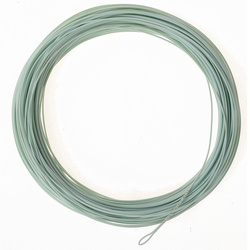
( number of products: 64 )In fly fishing, the line—not the nearly weightless fly—provides the mass that loads the rod and makes the cast. Your choice of line therefore affects how the entire outfit works, how the fly is presented and how comfortably you can fish. The number printed on the box is only a starting point: two 5-weight lines may differ in actual mass, head length and taper design.
Begin with the rod’s line rating, then compare the line’s measured grain weight, head length and shape, floating or sinking density, and the temperature range of its coating. This section includes floating fly lines, sinking fly lines, sink-tip fly lines, and shooting heads and running lines.











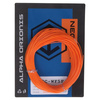
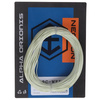


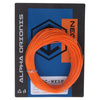


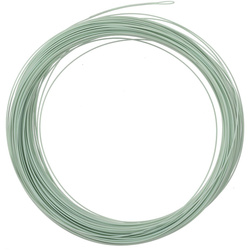
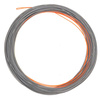

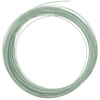

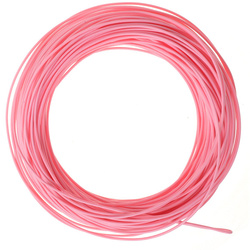
























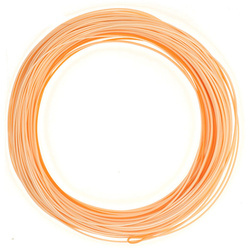




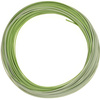
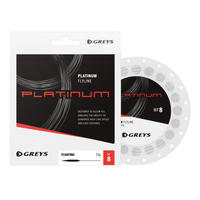
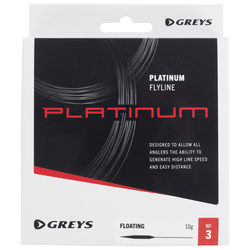








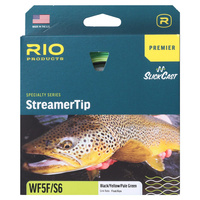











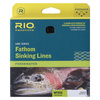


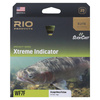


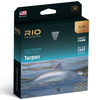
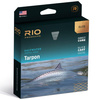








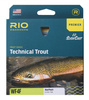
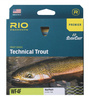
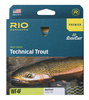
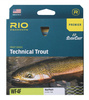













- 1
- 2
How to read fly-line markings
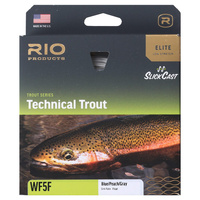
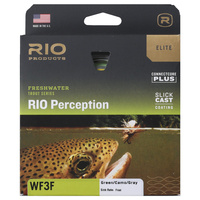
The marking WF5F gives three basic pieces of information. WF, or Weight Forward, means that the casting mass is concentrated in a head near the front of the line. The number 5 is the line weight, while F identifies a floating line. By the same system, DT4F is a floating Double Taper 4-weight, WF7I is a 7-weight WF intermediate, and WF8S4 is an 8-weight WF line with a Sink 4 density.
In a marking such as F/S3, the first part describes the floating body and the second the sinking tip. The letter L, or the word Level, denotes a line of constant diameter without a distinct head and thinner running section. Density codes are not perfectly uniform across manufacturers, so always check the stated sink rate in ips—inches per second—as well. One ips is approximately 2.54 cm per second.
AFTMA/AFFTA line-weight chart – grains and grams
Many anglers still refer to the AFTMA system, although the current trade organisation is AFFTA. For a conventional single-handed fly line, the line weight is based on the mass of its first 30 feet, or 9.14 metres, excluding the short level tip. It is not the mass of the entire line and, on longer tapers, it may not be the mass of the complete head.
| AFTMA/AFFTA line weight | Target mass | Weight range |
|---|---|---|
| #1 | 60 grains 3.9 g | 54–66 grains 3.5–4.3 g |
| #2 | 80 grains 5.2 g | 74–86 grains 4.8–5.6 g |
| #3 | 100 grains 6.5 g | 94–106 grains 6.1–6.9 g |
| #4 | 120 grains 7.8 g | 114–126 grains 7.4–8.2 g |
| #5 | 140 grains 9.1 g | 134–146 grains 8.7–9.5 g |
| #6 | 160 grains 10.4 g | 152–168 grains 9.9–10.9 g |
| #7 | 185 grains 12.0 g | 177–193 grains 11.5–12.5 g |
| #8 | 210 grains 13.6 g | 202–218 grains 13.1–14.1 g |
| #9 | 240 grains 15.55 g | 230–250 grains 14.9–16.2 g |
| #10 | 280 grains 18.15 g | 270–290 grains 17.5–18.8 g |
| #11 | 330 grains 21.4 g | 318–342 grains 20.6–22.2 g |
| #12 | 380 grains 24.6 g | 368–392 grains 23.8–25.4 g |
| #13 | 450 grains 29.2 g | 435–465 grains 28.2–30.2 g |
| #14 | 500 grains 32.4 g | 485–515 grains 31.1–33.7 g |
| #15 | 550 grains 35.6 g | 535–565 grains 34.3–36.9 g |
A grain is a unit of mass. One grain is approximately 0.0648 g, so 140 grains is about 9.1 g. Do not apply this table directly to Skagit, Scandi or Spey heads, or to other separate shooting heads. With those systems, manufacturers normally specify the mass of the complete head and a recommended grain window for a particular rod.
Not every modern line sold as a 5-weight has a target mass of exactly 140 grains. Some lines are deliberately built heavier to load a fast rod more quickly or to work efficiently at short range. Compare the measured mass of the first 30 feet, the total head weight and the head length rather than relying on the printed line weight alone.
How a WF fly line is built
The part of a Weight Forward line that loads the rod is called the head. It begins with the front taper, which narrows towards the leader. Behind it is the belly—the thickest section carrying most of the mass—followed by the rear taper, which transitions into the running line.
The running line is the thin rear section. It creates less resistance in the guides than the head, allowing it to shoot behind the head during the final phase of the cast. A thinner running line reduces friction, but can be harder to hold and more prone to tangling.
The head of an integrated WF line is not a separate component. A shooting head, by contrast, is a removable head connected to a separate running line.
What head length and taper shape change
A short, compact head concentrates its mass over a limited length. It loads the rod with less line beyond the tip and transfers energy more readily to a large, heavy or wind-resistant fly. This design is useful for streamers, large pike flies and situations with restricted room behind the caster.
A longer head allows more line to be carried in the air and gives the caster greater control over the loop. It can also make mending and managing line at distance easier, but requires better timing and awareness of where the rear taper meets the running line.
A long front taper dissipates energy gradually and supports a more delicate presentation of a small fly. A shorter, more powerful front taper retains more energy to turn over an indicator rig, weighted nymph, streamer or large fly.
WF, DT, Level or a shooting head?
WF – Weight Forward
The most common modern fly-line profile. Its head carries the casting mass, while the thinner running line allows the cast to extend after the head has been released. WF lines range from long, fine presentation tapers to short, powerful designs for bulky or heavy rigs.
DT – Double Taper
A Double Taper line narrows symmetrically towards both ends. It offers smooth turnover, good line control, comfortable roll casting and easy mending. DT profiles are especially useful with light outfits and for controlled presentation at short to medium range.
Level
A level line has the same diameter throughout, without a conventional head and thinner running section. This construction is found in some Euro-nymphing lines, where direct control and reduced line sag matter more than loading the rod with a conventional head.
Shooting head
A short, separate casting head attached to an independent running line. Interchangeable heads allow the angler to alter head weight, length and density without replacing the complete line.
Core and coating – what each part does
At the centre of a fly line is a core, usually braided multifilament or monofilament. It affects strength, stretch, stiffness and memory. A low-stretch core gives more direct contact with the rig, but also transmits sudden loads more sharply.
The core is surrounded by a coating, commonly made from PVC, polyurethane or a proprietary compound. The coating determines line diameter, surface finish, colour and density. Floating lines may contain lightweight microspheres, while sinking coatings use denser additives.
A coating should suit the temperature in which it will be fished. A cold-water line needs to remain supple in low temperatures. A tropical line is made stiffer so that it does not soften or become sticky on a hot deck. A tropical saltwater line may therefore behave poorly in winter conditions, and the reverse is equally true.
Floating, intermediate, sink-tip or full-sinking?
A floating line is the most versatile choice. It can be used for dry flies, many nymph and wet-fly methods, and streamers fished close to the surface.
An intermediate line sinks slowly below the surface. It keeps the line beneath the surface film and is particularly useful on stillwaters or when retrieving small streamers through a shallow layer.
A sink-tip line combines a floating or slower-sinking rear section with a sinking front section. It takes the fly deeper while retaining easier control of the rear of the line.
A full-sinking line sinks throughout its length. It helps keep the fly in a selected layer, but the sink rate must be matched to depth, current and retrieve speed. The final path of the fly also depends on countdown time, leader length, the weight or buoyancy of the fly, and the angle of presentation.
Which fly line suits each method?
- Dry fly: a floating WF or DT line, usually with a longer, gradual front taper.
- Conventional nymphing and indicator rigs: a floating WF profile capable of turning over the complete weighted rig.
- Euro nymphing: a thin specialist line, often with a level profile and low stretch.
- Shallow streamer fishing: a floating or intermediate line.
- Deeper streamer fishing: a sink-tip or full-sinking line matched to water depth and current speed.
- Stillwater: floating, intermediate or full-sinking, according to the layer in which the fly should travel.
- Large pike flies: a WF line with a short, powerful head and a line weight suited to both the rod and the size of fly.
- Spey, Scandi or Skagit: a head selected from the grain window specified for the exact rod, rather than from the AFTMA/AFFTA table alone.
How to match a fly line to a rod
The line rating printed on the rod is the starting point. Next, consider the flies you intend to cast, the distance at which the line needs to load the rod, whether delicate presentation or decisive turnover matters more, and the depth at which the fly must travel. Then compare head length, measured head mass, taper design, coating type and sink rate.
Frequently asked questions
Does every 5-weight fly line weigh 140 grains?
No. The 140-grain figure is the target value for the first 30 feet of a 5-weight line, while the standard range is 134–146 grains. Some modern lines intended for 5-weight rods are heavier still, so check the specifications of the exact line and size.
Do I always need a sinking line for streamer fishing?
No. A floating line works for streamers fished near the surface, an intermediate line reaches just below it, and a sink tip or full-sinking line serves deeper presentations. Choose according to the path the fly needs to follow, not simply because the pattern is called a streamer.
Are a WF head and a shooting head the same thing?
No. Every WF line has a head, but on an integrated line that head is permanently joined to the running section. A shooting head is a separate, interchangeable component attached to an independent running line.