
Fly-Tying Marker Pens for Bodies, Wings and Foam
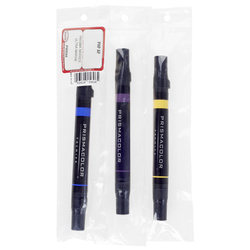
( number of products: 2 )Marker pens add barring, mottling, segmentation, shaded backs and small trigger points to fly-tying materials. They are especially useful on foam, synthetic wings, films, yarn, hair and completed streamer bodies. The result depends on the ink, nib, material surface and any coating applied afterwards.
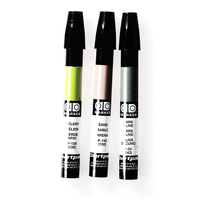







What can be coloured with a marker?
Markers can turn one base material into several controlled patterns: a darker nymph back, barred rubber legs, a mottled terrestrial body, gill or hot-spot detail, a streamer back or lateral marking. They are most effective when colour is added in thin layers rather than used to soak the complete material.
Test the material first
Ink can spread along porous fibres, bead on a smooth film or change shade over coloured foam. Mark a small offcut and let it dry. Then wet, flex and rub it before applying the same technique to a finished fly. The apparent colour on the pen cap is not a reliable prediction of every surface.
Nib and line control
A fine point draws segments, spots and narrow bars. A broader edge shades a back or covers foam. Work from light to dark, allowing each layer to dry. For repeated bars, mark the material before tying when it can be held flat and measured more easily.
Colouring foam
Use light strokes and avoid crushing the surface with the nib. A darker back over a lighter underside creates contrast without adding another layer of foam. Some inks or solvents can affect particular foams, so compatibility testing is essential.
Hair, fibres and synthetic wings
Align fibres before drawing a bar so the marking remains coherent after tying. Very soft hair can wick ink towards the base. Synthetic wing sheets and films normally need a dry clean surface; fingerprints, dressing or adhesive can prevent even coverage.
Coatings and adhesives
Clear resin or varnish can deepen, blur or dissolve a marker line. Allow ink to dry fully and test the complete ink-and-coating combination on an offcut. A durable finished surface is a system, not a property of the marker alone.
Safe handling and storage
Follow the manufacturer's instructions, provide ventilation where required and keep caps closed when the pen is not in use. Do not apply solvent-rich ink near a flame or heat source. Store pens in the orientation recommended for the design so that the nib remains usable.
Frequently asked questions
Is a marker line permanent on every material?
No. Durability varies with ink, surface, abrasion, water exposure and any coating. Test the actual combination.
Should the fly be coloured before or after tying?
Flat materials and regular barring are often easier to mark before tying. Shading that must follow the finished shape is applied afterwards.
Why did the clear coat change the colour?
The coating may have reactivated the ink or altered its optical density. Increase drying time or use a tested compatible combination.
For the complete selection of materials to colour, return to fly-tying materials and tools.