
Cock and Hen Capes and Saddles for Fly Tying
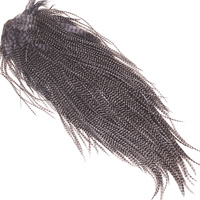
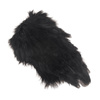
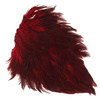
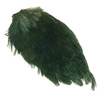
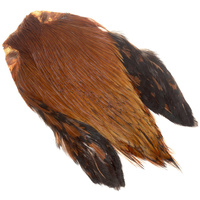
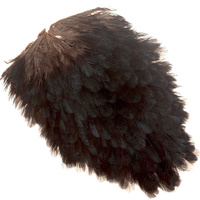
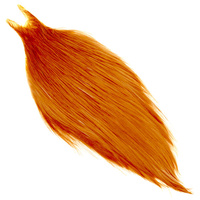
( number of products: 65 )A neck cape provides a broad range of feather sizes, while a saddle generally provides longer and more consistent hackle. Cock hackle may be stiff enough for dry flies or long enough for streamers. Hen feathers are softer and more webbed, making them useful in wet flies, nymphs and mobile collars.
Full and half capes, saddles, patches and selected sections from different producers use their own grading systems. Compare grades only within the same manufacturer's system and select for the flies you intend to tie.






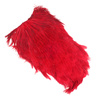
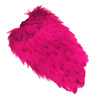
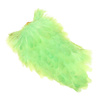
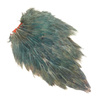












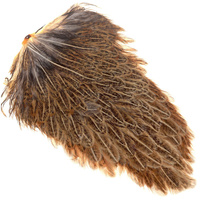
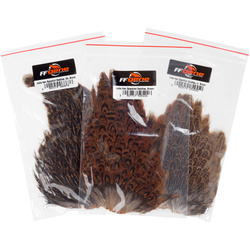



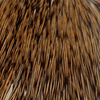


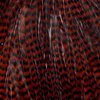



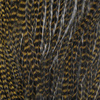


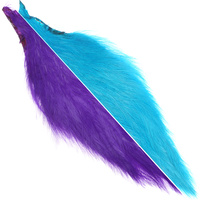
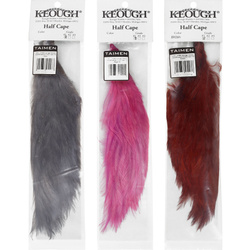


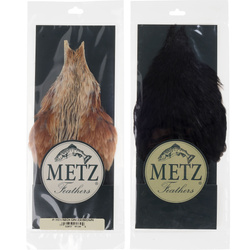


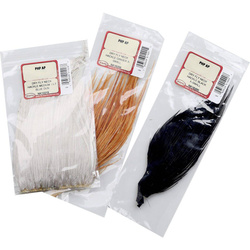




























- 1
- 2
Cape, neck and saddle describe origin
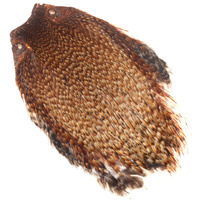
Cape and neck refer to plumage from the neck area. Feathers vary gradually in size and are relatively short, giving one cape broad coverage across hook sizes. Saddle feathers grow over the back. Genetic dry-fly saddles can be exceptionally long and uniform but cover fewer sizes.
Choose a cape for range
A cape suits a tier who needs hackle for many dry-fly sizes, smaller wings, tails and general feather components. Examine the distribution of usable sizes rather than assuming that every area has dry-fly quality.
Choose a saddle for repetition
A long saddle feather can hackle several flies of one size and reduces preparation during batch tying. Streamer saddles and schlappen are selected for length and movement rather than dry-fly stiffness, so the word saddle alone does not define use.
Cock or hen?
Quality cock dry-fly hackle has stiff barbs, limited web and a fine flexible stem. Hen hackle has softer barbs and more web, producing movement and a fuller translucent collar below the surface. Neither is universally better; each provides a different mechanical result.
Genetic, Indian and utility hackle
Genetic lines are selected for traits such as barb density, stiffness, stem quality and usable length. Indian and utility capes can provide valuable wet-fly, streamer, wing and tail material. Judge the individual patch according to function, not prestige.
Matching dry-fly hackle
Measure barb length against the intended hook gape using a gauge or direct comparison. The traditional proportion is a starting point and can be adjusted for parachute, thorax and low-floating styles. Check that the usable stem winds without twisting or splitting.
Streamer capes and saddles
Long broad feathers with web create flowing wings and collars. Paired feathers should have corresponding curve and width. For palmered bodies, select a stem that remains flexible over the full wound section.
Grizzly, barred and speckled
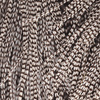
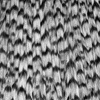
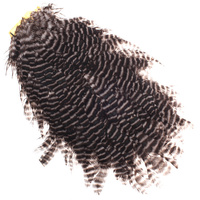
Grizzly has alternating light and dark bars. Other barred and speckled variants create different contrast frequencies. The visual scale should suit the fly; a broad bar can disappear on a tiny hackle turn while fine barring can merge at distance.
Use the material economically
Reserve the prime size-consistent area for patterns that need it. Larger and softer feathers can form tails, wings, throats and streamer collars. Store clipped feathers in labelled packets rather than discarding useful offcuts.
Frequently asked questions
Is a saddle better than a cape?
No. A saddle excels at long repeated hackle; a cape offers a wider size range.
Can hen hackle be used on a dry fly?
It can be used in patterns designed for softer or lower-floating hackle, but it does not behave like stiff genetic cock hackle.
Does the highest grade mean the strongest feather?
Not necessarily. Grade can reflect density, size range, appearance and usable yield under one manufacturer's criteria.