
Dubbing twisters and dubbing-loop tools
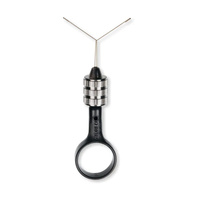
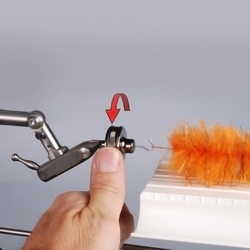
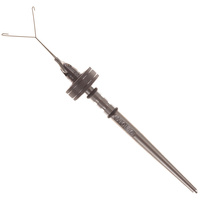
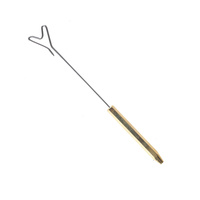
( number of products: 14 )A dubbing twister spins a thread loop into a durable, three-dimensional strand of tying material. Natural or synthetic dubbing, fur, CDC fibres, flash or a blended mixture can be placed inside the open loop and twisted into a brush ready to wind around the hook. Our range includes Y-shaped tools, rotary and bearing-assisted designs, compact twisters and models suited to split-thread techniques.
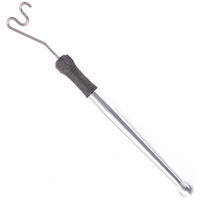

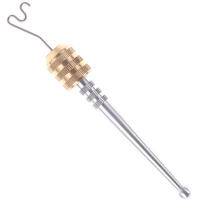
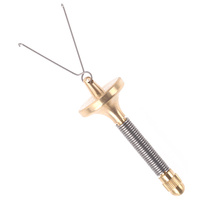
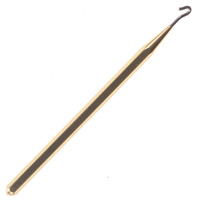





What does a dubbing loop achieve?
A dubbing loop traps fibres between two strands of thread, allowing the tier to create a body, collar or mobile fly component without applying all the material directly to a single thread. Once spun, the loop becomes a brush-like strand that can be teased out, trimmed or wound in close turns. The method is widely used in nymphs, wet flies and streamers and, in a lighter form, in emergers and dry flies.
Main types of dubbing twister
- Y-shaped twisters hold the two sides of the loop apart and make it easier to distribute material before spinning.
- Rotary and bearing-assisted tools add turns quickly, which is useful with a longer loop or a dense volume of material.
- Compact twisters work neatly close to a small hook and occupy little room at the tying bench.
- Split-thread tools help spin material inserted between separated thread filaments without forming a conventional doubled loop.
- Hook and clamp arrangements retain the loop in different ways; the best choice depends on thread type and the tier's preferred method.
Choosing a dubbing twister
A tool that generates fast, powerful rotation is useful for substantial streamer brushes and larger amounts of fur. For small nymphs, compact dimensions, precise control and easy handling of a short loop may matter more. A bearing can improve rotational smoothness, but tool weight, handle shape and the way the thread is retained are equally relevant.
Distribute the material as evenly as possible, close the loop and then increase the twist gradually. A loose loop will not secure the fibres, while excessive rotation may break a fine thread. Once the strand has formed, trapped fibres can be released with a dubbing needle, brush or comb either before winding or after the body is complete.