
Synthetic Wing Materials for Dry Flies
( number of products: 12 )Synthetic wing fibres make it possible to control visibility, volume and water shedding without copying the exact structure of a natural feather. They are used for upright mayfly wings, caddis and stonefly wings, parachute posts, spent wings and bright indicators.
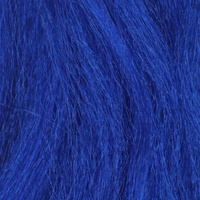
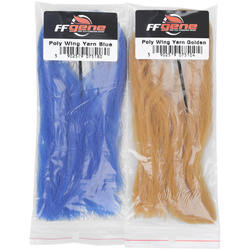
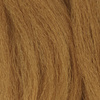
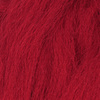
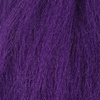




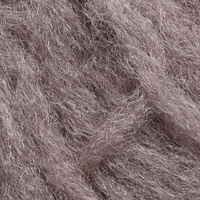




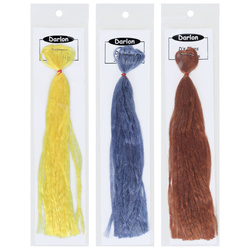












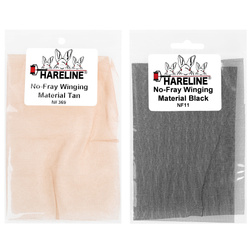


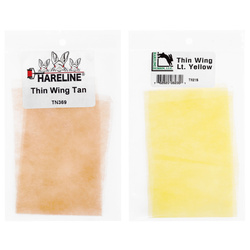


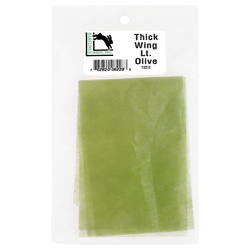


Choose the function before the colour
A dry-fly wing may need to be visible to the angler, suggest an insect silhouette, support the fly on the surface or simply provide a post around which hackle can be wound. One material does not need to perform all these functions. Select fibre stiffness, fineness, translucency and compressibility for the particular construction.
Main wing forms
- Upright divided wings: fine fibres that can be split cleanly and retain a tapered outline.
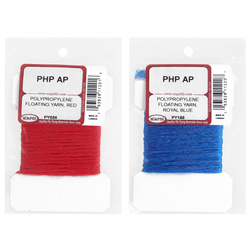
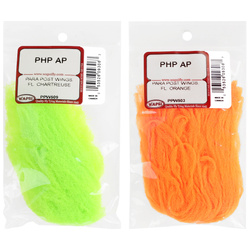
- Parachute posts: materials that bind firmly, remain visible and allow hackle to be wound without slipping.
- Spent wings: sparse, fine fibres that spread horizontally without excessive bulk.
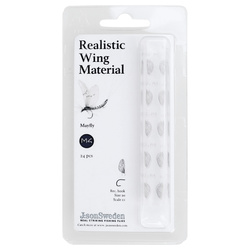
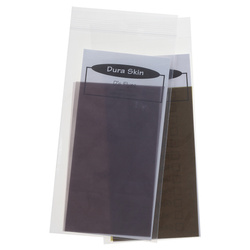
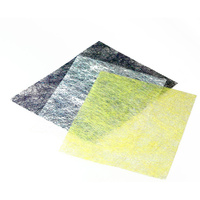
- Caddis and stonefly wings: fibres, films or shaped materials capable of forming a low roof-like profile.
- Indicators: bright fibres placed in a small controlled amount so they aid tracking without dominating the imitation.
Fibre structure matters
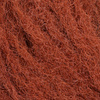
Straight aligned fibres produce a clean edge. Crimped or textured fibres trap more air and create volume. Very fine translucent fibres suggest a light wing but may be difficult to see against glare. Coarser opaque fibres are easier to track but require restraint on small hooks.
Floating material does not guarantee a floating fly
Some synthetic fibres absorb little water and can help a fly dry quickly. The finished fly still depends on hook weight, hackle, body materials, proportions, surface tension and treatment. A large dense wing can twist a leader or tip the fly even when the fibre itself is light.
How much material should be used?
Begin with less than the loose bundle appears to require. Thread pressure spreads fibres and increases the footprint. For a divided wing, tie one controlled bundle and separate it; two independent bulky bundles often produce an oversized thorax. For a parachute post, make the base firm enough for the hackle stem without creating a thick step in the body.
Cut or preserve the ends?
Many synthetic wing fibres have no natural taper and may be trimmed to shape. Tearing or staggering the ends often gives a softer outline than one square cut. Pre-shaped or film wings should be cut according to the intended profile and tied where the material cannot rotate.
Visibility in real fishing conditions
White is clear against dark water but can disappear in glare. Fluorescent orange, pink or chartreuse may be easier to track in broken water, while black is often visible against a bright reflection. A small contrasting post can be more useful than increasing the whole wing.
Frequently asked questions
Can wing material replace hackle?
Sometimes the wing or post contributes support, but it does not automatically replace the stabilising footprint of hackle or other components.
Should dry-fly wings be impregnated?
Only when the material and pattern benefit from it. Use a compatible dressing sparingly; excess product collects dirt and can collapse fine fibres.
Why does a fly spin during casting?
An oversized or asymmetric wing is a common cause. Reduce bulk, correct alignment and use an appropriate leader.