
Fishing Forceps and Hemostats
( number of products: 36 )Fishing forceps and hemostats provide a controlled grip on the hook for efficient hook removal and barb crimping. Fine jaws reach small flies, longer tools improve access and straight or curved tips approach the hook from different angles. The category also includes scissor clamps, glove-friendly designs, multi-tools and specialist point-handling tools.
Choose a jaw size appropriate to the hooks you use. A powerful coarse tool can damage a fine hook, while a short delicate clamp may provide too little reach or leverage for larger patterns.

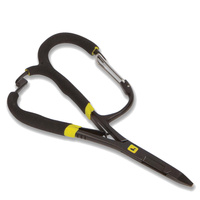


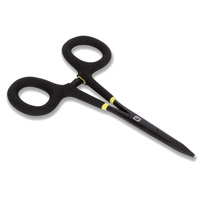

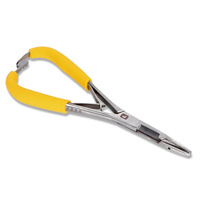

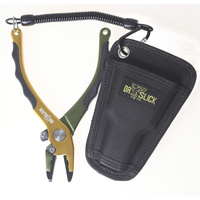


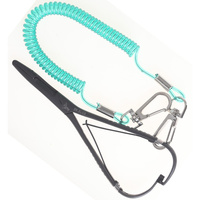
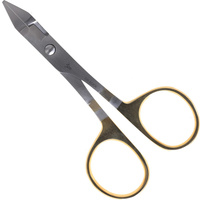


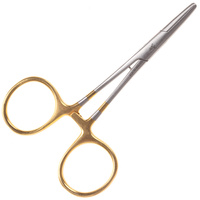
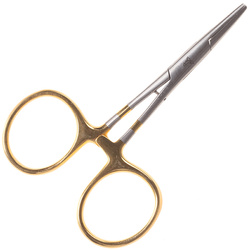

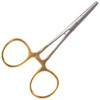
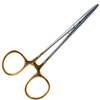
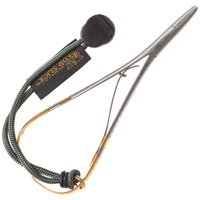
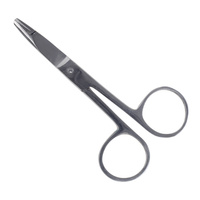

Hemostat, pliers or scissor clamp?
A hemostat or locking scissor clamp uses ratcheted handles to maintain pressure without a continuous grip. It is precise and easy to hang from a finger loop or retractor. Conventional pliers do not lock but can provide quicker repeated movement and more leverage. Combination tools may add cutters, an eye-cleaning point or other functions, although every extra function should remain safe and usable when wet.
Jaw length and shape
Short straight jaws give direct control and suit accessible hooks. Long jaws reach deeper without forcing fingers close to the hook, but excessive length can reduce fine feedback. Curved jaws help approach a hook from the side and can improve visibility. Smooth or finely textured contact areas are normally better suited to delicate hooks than aggressive teeth.
Removing a hook
- Keep the fish supported in water whenever conditions allow.
- Control the leader and locate the hook point before bringing the tool close.
- Grip the bend or shank securely without crushing the fly or fish.
- Turn the hook back along its entry path instead of pulling against the bend.
- Cut the leader if continued handling would cause more harm than leaving the hook to be dealt with safely.
Never place fingers inside the mouth of a fish with sharp teeth. Use sufficient tool length and an appropriate protective method for the species.
Crimping a barb
Crimp the barb before fishing, ideally at the tying bench or before the fly is attached. Place the barb between flat sections of the jaws and use only enough force to close it. Inspect the point afterwards: a fine hook can crack or roll if squeezed with an oversized serrated tool. A purpose-made barbless hook avoids this operation entirely.
Glove-friendly and multifunction tools
Large finger loops, external grip areas and a positive spring action are easier to operate with cold hands or gloves. Test that the lock can be released without excessive force. A multifunction tool saves space only when its cutter, jaws and other elements suit the materials being used; do not cut wire or braid unless the specification permits it.
Materials and corrosion
Stainless steel improves corrosion resistance but does not remove the need for care. Rinse forceps after saltwater use, work clean water through the joint and dry the tool open before storage. Check alignment, locking teeth and jaw edges. Surface corrosion, a loose joint or misaligned tips reduce precision and can damage hooks.
Selection checklist
- match jaw size to the usual hook range;
- choose enough length for safe access to the target species;
- select straight or curved tips for the working angle;
- check the lock and finger loops with wet or gloved hands;
- use a secure attachment point or zinger;
- confirm whether any cutter suits the intended material.