
Fly rods: choosing line weight, length and action
( number of products: 27 )A fly rod casts by working under the load of a fly line, not by throwing the almost weightless fly on its own. Choose the rod around the flies, line profile, fishing distance and water first, then account for the target fish. Delicate dry-fly presentation, European nymphing, stillwater fishing, large streamers and Spey casting require different combinations of length, line weight, action and power.
The label on the blank is a recommendation, not a complete description. Two rods rated for #5 lines may bend differently, recover at different speeds and feel best with different head profiles. The most useful rod is the one that loads clearly and remains controllable at the distances and with the flies you actually fish.
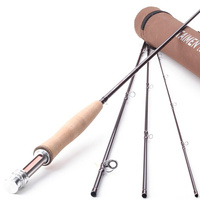


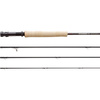
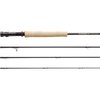
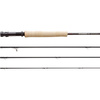

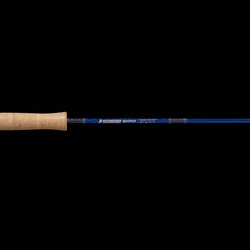
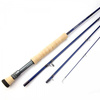
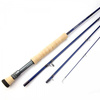
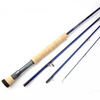


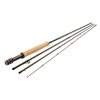
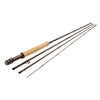


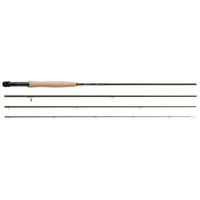



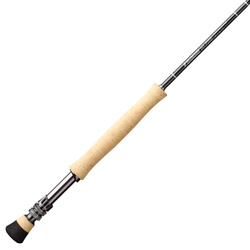







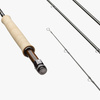
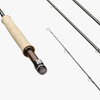
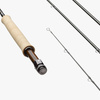
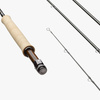

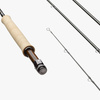
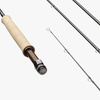
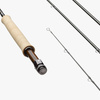
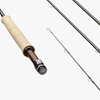
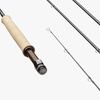








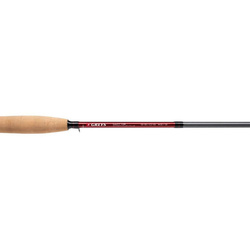








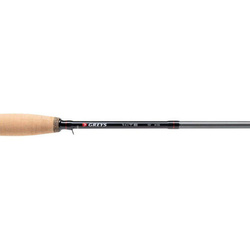





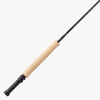
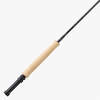
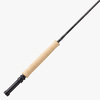

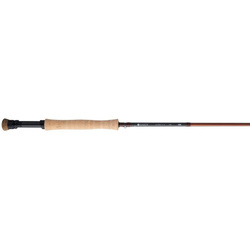







Start with the fly, line and water
Ask four questions before comparing rods: how large and air-resistant are the flies, what line or head will deliver them, how much room is available for the cast, and how must the line be controlled after it lands? Fish size influences fighting power, but the fly and line create the casting load. A bulky pike fly may require a powerful outfit even when it is comparatively light on a scale.
Every choice balances presentation, line control, distance, wind and fatigue. A general trout rod can cover several methods, but moving further from its intended task makes compromises more visible. A specialist European-nymph rod, for example, is not simply a longer version of a conventional dry-fly rod.
What do AFFTA line weights mean?
The AFFTA single-handed line-weight table classifies the mass of the first 30 ft, or 9.14 m, of a conventional fly line, excluding the short level tip. The older name AFTMA is still widely used in European conversation. The standard defines the line, not the stiffness or fighting power of a rod. A #5 mark on a blank is the manufacturer's recommendation for a range of lines and uses.
Modern tapers can place more mass near the front of the head or be deliberately heavier than the centre of their nominal class. Head length matters as much as total mass: a short concentrated head loads a rod quickly and turns over bulky flies, while a longer head carries more line in the air and asks for more space and timing. Switch and double-handed rods should be matched by the manufacturer's head-weight range, often stated in grains, together with the intended Scandi, Skagit or Spey system. The single-handed 30 ft table should not be applied to them without context.
Typical starting points
| Application | Typical length | Common line range | Main requirement |
|---|---|---|---|
| Small stream and light dry flies | about 7–8 ft 6 in | #2–#4 | Short-range accuracy and room beneath vegetation |
| General river trout fishing | 8 ft 6 in–9 ft | #4–#5 | Balance of presentation, line control and versatility |
| European nymphing | 10–11 ft | #2–#4 | Reach, sensitivity and control of a thin system |
| Stillwater | 9 ft 6 in–10 ft | #6–#8 | Wind, longer heads and several line densities |
| Streamers and larger rivers | about 9 ft | #6–#8 | Turning over the fly and any sinking tip |
| Pike and large streamers | 8 ft 6 in–9 ft | #8–#10 | Controlling air resistance and concentrated head mass |
| Switch and double-handed | about 10 ft 6 in–15 ft | manufacturer head-weight range | Head mass, head length and casting style |
These ranges are starting points, not fixed boundaries. The exact fly, line profile, wind, current and manufacturer guidance take priority.
How rod length changes fishing
A shorter rod is easier to move beneath branches and within a confined casting arc. A rod around 9 ft is a practical compromise for many single-handed methods. Additional length improves reach, mending and the control of nymphs or multiple flies, but it also increases leverage on the wrist. Catalogue mass alone does not describe fatigue; balance and swing weight shape how heavy a rod feels in motion.
Switch and double-handed rods use length and both hands to manage an anchor and form Spey-style casts. They are not simply long single-handed rods. Their handle layout, action and recommended head range are designed around a different casting system.
Action, power and recovery are different properties
Action describes where a rod bends most visibly under a given load. A fast-action rod initially bends more in its upper section, while a medium or slower rod engages more of the blank. Manufacturers do not all measure these labels in the same way, so they are useful for comparison within context rather than as universal grades.
Power is the resistance the blank offers under load. A fast rod need not be rigid throughout its length, and a deeply bending rod need not be weak. Recovery describes how quickly unwanted oscillation settles after the stop. It can help form a clean loop, but it cannot compensate for poor timing or a mismatched line.
An angler with a smooth, wider casting stroke may read the load of a deeper-working rod more easily. Someone using a short stroke and higher line speed may prefer a quicker response. The right action is the one whose load can be felt and controlled across normal fishing distances.
Rods for dry flies and nymphs
Dry-fly presentation depends on stable loop formation and controlled transfer of energy into the leader. Delicacy does not come from a low line weight alone; taper, leader length, fly size and the final stop all matter. A shorter rod can be useful on a tight stream, while more length helps mend line and extend a natural drift on broader water.
Indicator nymphing asks the rod to lift line, leader, indicator and weighted flies. European-nymph rods are generally longer and light in line rating because reach, tip sensitivity, protection of fine tippet and low fatigue matter more than carrying a conventional fly-line head in the air. Length alone does not make every 10- or 11-foot rod suitable for that method.
Stillwater, streamer, pike and saltwater rods
A large streamer resists the air and may retain water. It needs a line with mass in the appropriate part of the head and a rod able to control that mass. Choose the outfit around the largest fly used regularly rather than the size of the fish alone. Stillwater rods often work with floating, intermediate and sinking lines, longer heads and repeated distance casting.
Saltwater rods must deliver the chosen fly in wind and retain suitable fighting power for the species. Corrosion-resistant components and the ability to rinse the guides and reel seat matter, but the word saltwater does not define one line-weight range. Pike fishing similarly requires a balanced casting system and a suitable bite-resistant trace.
Matching a fly line to the rod
Begin with the rod manufacturer's recommendation, then compare the fly line by head mass, head length, taper and density. A short concentrated head loads readily at close range and turns over larger flies. A long head can carry more line in the air but requires space and control.
Using a line one number heavier is not a universal cure. It may improve short-range loading, but it can slow the blank, reduce control of a long head or exceed the intended load. A line that is too light may make the rod difficult to read. Where the manufacturer provides a grain window, use it rather than relying on the printed line-weight number alone.
Matching the reel and components
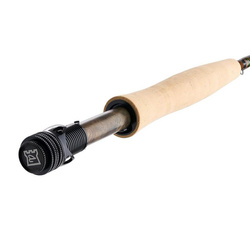
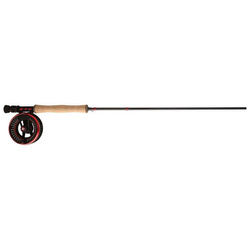
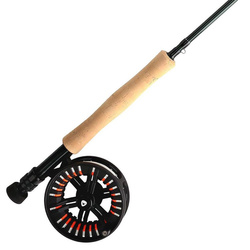
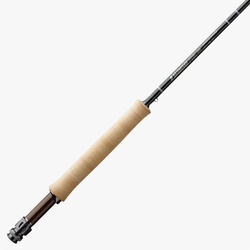
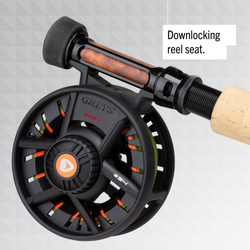
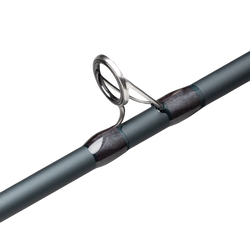
The fly reel must hold the line and backing and should balance the rod in use. Long nymph, switch and double-handed rods often feel better with more reel mass than a short rod carrying the same nominal line weight. Handle shape, reel-seat security, guide finish and transport length also affect daily use.
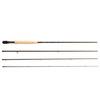
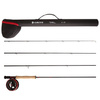
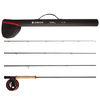
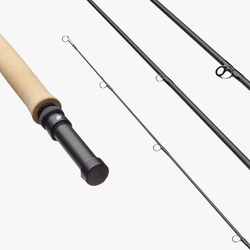
More sections do not automatically make a modern rod weaker or less responsive. Properly designed ferrules are part of the blank. Clean grit from the joints, assemble them firmly without forcing them and check their alignment during fishing. A loose ferrule concentrates stress and can cause damage.
Before buying
- Define the largest regular fly and the heaviest rig.
- Select the line or head needed to deliver it.
- Match rod length to the water, vegetation and required line control.
- Check head mass and length, especially for Spey, switch and large-streamer systems.
- Fit a reel and assess grip comfort, balance and fatigue with the complete outfit.
- Confirm the transport length and protection of every section.
Care and common mistakes
Impact from a heavy fly, a car door, grit in a ferrule and concentrated pressure damage more rods than an ordinary fish fight. Do not pull a snag free with the rod in a deep bend; point the rod along the line and load the leader directly. Do not lift a fish clear of the water with the rod. After use, dry the rod before closing it in a tube and rinse components after saltwater fishing.
Frequently asked questions
Does line weight describe fish size?
No. It describes the line used for casting. Fish size, fly size, wind, leader strength and the method together determine the appropriate outfit.
Will every #5 line suit every #5 rod?
Not necessarily. Lines of the same nominal class can have different head lengths and mass distributions. Compare the actual line specification with the rod recommendation.
Is fast action best for a beginner?
Not automatically. A beginner benefits from a rod that loads clearly at normal practice distances and matches the line. Some anglers feel that load more easily in a medium or medium-fast action.
Can a European-nymph rod cast a dry fly?
Many can make a limited dry-fly presentation, but their length, guides, line system and intended loading differ from a conventional dry-fly outfit. Occasional capability is not the same as an ideal primary use.
Do more sections weaken a rod?
Not by themselves. Ferrule design, materials and correct assembly matter more than section count. Additional sections mainly change transport length and the number of joints that need care.
This guide explains stable selection principles. Exact line recommendations, grain windows, component materials, lengths and weights remain in the individual product specifications.