
Fly-Tying Scissors
( number of products: 20 )Choose fly-tying scissors for the material and type of cut, not merely by tool size. Short fine points work close to a small fly head, longer blades cut broad strips evenly, curved blades help shape a profile, and hair or synthetic scissors must handle greater volume.
Keep a separate robust pair for wire and hard materials so that the precision edges used on thread, feathers and dubbing remain undamaged.

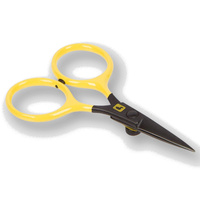

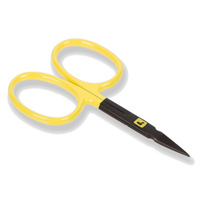
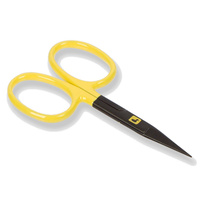

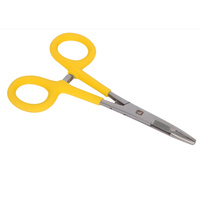
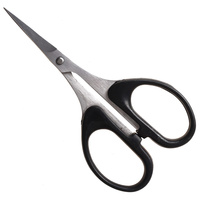


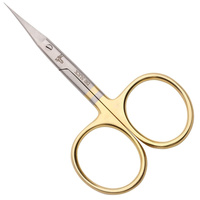
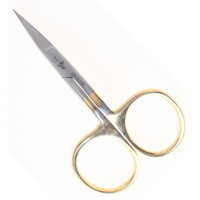
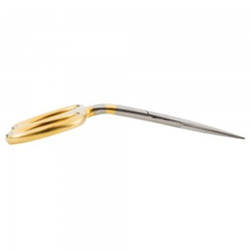


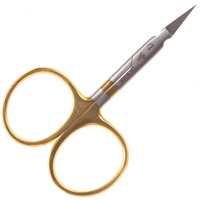
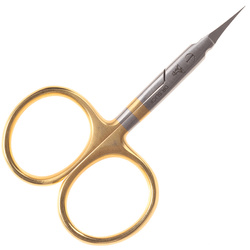



One pair does not need to cut everything
Fine scissors excel at thread, feather stems and precise trimming. General-purpose tying scissors cover routine materials. Heavy scissors handle hair, foam and dense synthetics. Wire, lead-free materials and hard plastic should be cut only with a tool rated for them.
Blade shape and length
Short straight blades maximise control near the hook eye. Long blades produce straighter cuts across foam, fur and synthetic sheets. Curved blades help shape rounded heads and tapered bodies, although the curve direction and handedness must suit the user. Serrated edges grip slippery hair and synthetics rather than pushing them ahead of the cut.
Hair and synthetic materials
Dense deer hair, long synthetic fibres and stacked wings require sufficient jaw opening and leverage. Make several controlled cuts rather than twisting delicate points through a thick bundle. Rough shaping and final finishing are often better performed with separate scissors.
Carbide and specialist edges
Carbide inserts and other hard edge materials can retain sharpness, but geometry, alignment and user care remain important. Hard blades may chip if dropped or used against metal. The material name alone does not make scissors universal.
Grip and fit
Finger loops must permit repeated use without pressure points. Open-loop and spring scissors remain in the hand for fast trimming; conventional loops provide secure control. Test whether the points remain visible and whether the tool can be rotated naturally in the tying hand.
Care
Use the blades only on intended materials, remove adhesive before it hardens and wipe away fibre residue. Do not lever components with the points. Store scissors closed or protected and have valuable precision pairs sharpened by an appropriate service rather than grinding them casually.
A practical bench set
- fine-point scissors for thread and work near the eye;
- general scissors for feathers, dubbing and light synthetics;
- strong or serrated scissors for hair and bulky material;
- a separate cutter for wire and hard components.