
Tapered Fly Leaders — Length, Construction and X Size
( number of products: 11 )A tapered leader changes progressively from a thick butt section near the fly line to a fine tip near the fly. The taper carries energy more effectively than level monofilament and helps the leader turn over. The X number printed on the packet identifies the terminal diameter, not the diameter of the entire leader.
Compare 7.5, 9, 12 and 15 ft leaders by terminal X size, stiffness and intended use. Standard dry-fly leaders, specialist Euro-nymphing leaders and coated polyleaders perform different jobs.
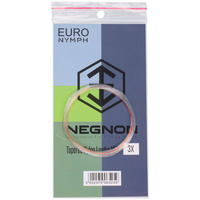
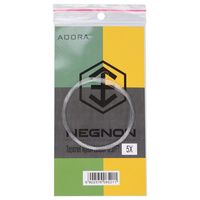




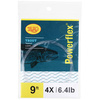


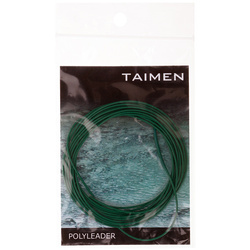




What are the parts of a tapered leader?
The thick butt section attaches to the fly line and accepts energy from the loop. The middle section progressively reduces in diameter. The final, fine section is the tippet, where the fly is tied. The proportions of these sections determine how firmly or delicately a leader turns over.
A knotless leader forms the taper continuously. A knotted leader creates it from several pieces of level material. Knotless construction passes through guides cleanly and collects less debris; a knotted design is easier to rebuild and tune by changing the length or stiffness of individual sections.
What does the X marking on a leader mean?
A leader marked 5X does not measure 5X from end to end. The rating describes its fine terminal tip. Nominally, 5X is 0.006 inch or 0.152 mm, while the butt is much thicker. This distinction matters when replacing the tip or comparing leaders from different manufacturers.
The complete 0X–8X table is available in the parent guide. When the packet also gives millimetres, use that figure for precise matching because manufacturers may round X conversions differently.
7.5 ft, 9 ft, 12 ft or 15 ft?
- 7.5 ft: turns over positively and is easier to control in wind, on small streams and with relatively bulky flies.
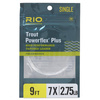
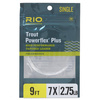
- 9 ft: the general-purpose choice for many trout lines, dry flies and light nymph rigs.
- 12 ft: creates more separation between line and fly and can support a delicate presentation in clear or calm water.
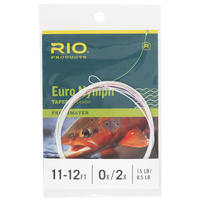
- 15 ft: usually a method-specific leader, particularly in Euro nymphing, where length and visibility are part of the system.
A longer leader is not automatically better. It needs enough butt diameter and a suitable taper to transfer energy. Heavy flies, strong wind and restricted casting space may favour a shorter, more assertive design.
How should leader length and X size match the fly?
Large or wind-resistant flies require enough stiffness and diameter to turn over. Small dry flies benefit from a finer tip that does not dominate their movement. For nymphs, target depth, total fly weight and current speed are as important as hook size.
The familiar rule that divides the hook size by three to estimate X can provide a rough starting point for conventional dry flies. It is not a specification: fly bulk, fish size, wind and material stiffness can justify a different choice.
Dry-fly and nymphing leaders
A dry-fly leader normally needs controlled turnover followed by a fine tip that lands with little disturbance. Nylon is often selected because it is relatively supple and tends to remain in the surface film. Degreasing the final section can alter how it sits, but must not be confused with reducing diameter.
A nymphing leader is built around depth and contact. Conventional indicator nymphing may use a sturdy butt and an adjustable indicator. Euro-nymphing leaders are often longer and incorporate a visible sighter above a fine terminal section. Their design serves line control rather than ordinary overhead turnover.
What is a polyleader?
A polyleader is a tapered, coated leader extension with a monofilament core. Versions with different density profiles can change the depth and angle at which a fly fishes. It is commonly looped to the fly line and finished with a separate tippet appropriate to the fly and quarry.
It should not be treated as an exact substitute for every nylon tapered leader. Compare length, density, core strength and the recommended terminal material for the intended line and method.
How do you extend the life of a tapered leader?
Add new tippet before repeated fly changes cut into the taper. A small micro ring can provide a permanent junction in some nymphing setups, although its weight may be undesirable with very small surface flies. Inspect the leader after snags and contact with rocks.
Gentle stretching can reduce coil memory, but excessive friction in a leader straightener produces heat and can damage the material. Replace any section that is rough, cloudy, flattened or kinked.
Frequently asked questions
Can a 5X leader be finished with 6X tippet?
Yes. A short, sensible step to a finer diameter is common. Avoid abrupt changes across several sizes because the joint becomes harder to turn over and the finer material becomes an isolated weak point.
Can tippet be tied directly to the fly line?
It can be attached physically, but for ordinary casting it removes the butt and taper that transfer energy. A properly matched leader is the better starting point except in specialised rigs designed around a different connection.