
Fly-Tying Dubbing: Fibres, Blends and Techniques
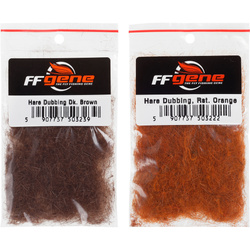
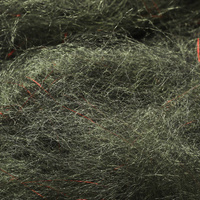
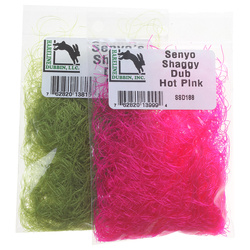
( number of products: 148 )Dubbing is not one material but a method and a broad family of fibres. Fine dry-fly dubbing, natural fur, coarse nymph blends, translucent synthetics, flash mixtures and long streamer fibres differ in length, texture, stiffness, sheen and the way they are applied.
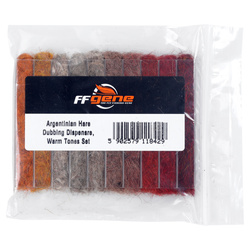
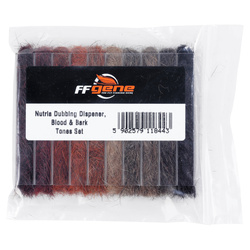
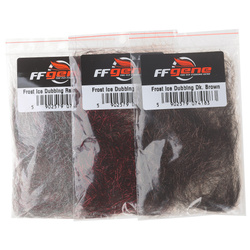
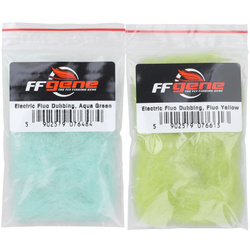
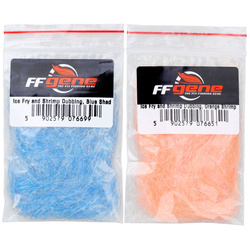
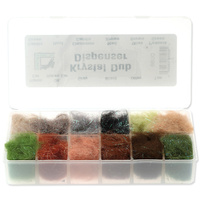
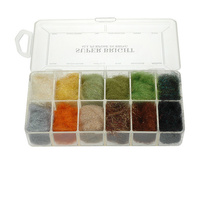
Use individual dubbing packs and blends when a precise colour, structure or larger quantity is required. Dubbing dispensers provide a coordinated palette of smaller portions.




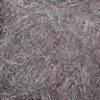
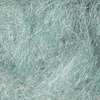
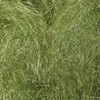

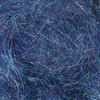
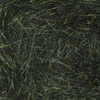
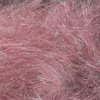
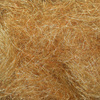
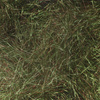
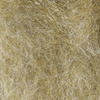
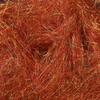
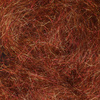

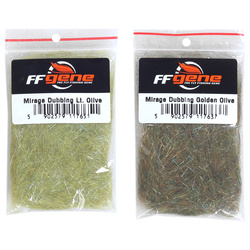
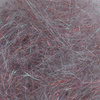
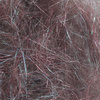



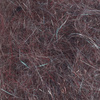




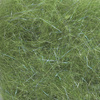
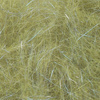

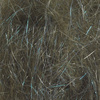
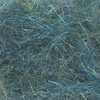








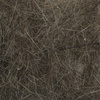


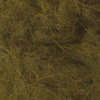
































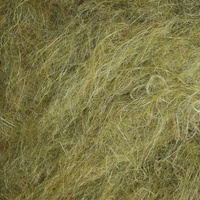
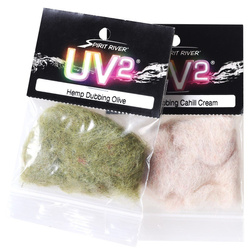
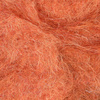

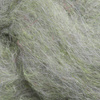
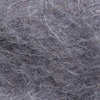
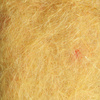
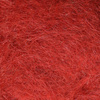

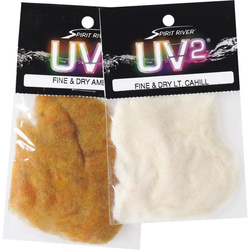

















































































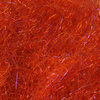


Five properties that define dubbing
Fibre length
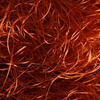
Short fibres form thin, controlled bodies on small flies. Medium fibres cover general nymph and wet-fly work. Long fibres create shaggy bodies, legs and mobile profiles for streamers and predator flies. Long material can be aligned or blended; cutting it bluntly often creates an unnatural, uniform edge.
Texture and resilience
Soft underfur compresses into a smooth noodle. Guard hairs and coarse synthetics stand away from the body and remain visible after brushing. Resilient fibres create volume with less material, while very soft fibres collapse in current.
Sheen and translucency
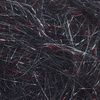
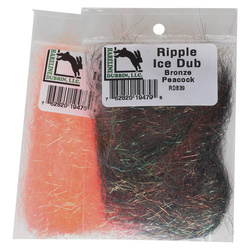
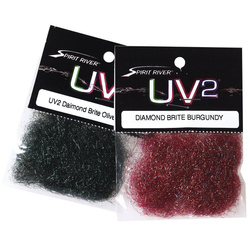
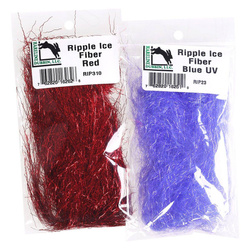
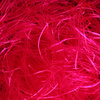
Matt fur produces a subdued body. Antron, SLF and related synthetics can be translucent or softly reflective. Ice, flash, holographic and UV fibres create stronger highlights. UV in a product name can refer to fluorescence, reflectance or simply a commercial colour family, so the actual specification matters.
Ability to form a thin noodle
Fine fibres grip lightly waxed or unwaxed thread and allow controlled taper. Coarse, slippery or long fibres may need a split thread or dubbing loop. The technique should suit the material rather than forcing every blend onto a conventional noodle.
Behaviour after brushing
A brushed body can expose guard hairs, create legs and merge several colours. A fine dry-fly body is usually left compact. Consider the final brushed state when choosing the starting quantity.
Natural, synthetic or blended?
Natural fur often combines fine underfur with guard hairs, giving both a binding matrix and irregular movement. Synthetic fibres offer repeatable colour, controlled length, translucency and specialised flash. Blends combine these properties and are not inherently inferior to pure materials.
The animal or fibre name does not determine one texture. Hare's ear, rabbit, squirrel and opossum blends differ according to the part of the pelt, proportion of guard hair and processing. Commercial synthetic families can contain several distinct blends under related names.
Selection by fly type
| Fly type | Useful fibre character | Typical finish |
|---|---|---|
| Dry fly | Fine, short and easy to apply sparsely | Tight tapered body |
| Nymph or caddis larva | Fine base with optional guard hair or translucency | Compact or lightly brushed |
| Scud | Translucent mixed fibres with controlled flash | Picked out beneath a shellback |
| Streamer | Longer fibres, movement and optional bright highlights | Looped, brushed or stacked |
| Pike and saltwater | Long resilient fibres that maintain volume | Large brushed profile |
Use less than you first expect
The most common dubbing error is excessive material. A thin uneven pinch can be added; a thick lump is difficult to remove and hides the taper. Spread fibres along several centimetres of thread and tighten gradually.
Four application techniques
Conventional dubbing noodle
Twist a small amount around tying thread in one consistent direction. This is efficient for fine and medium fibres and produces a controlled body.
Touch dubbing
Apply a light tack or wax to the thread and touch sparse fibres onto it. The method creates a translucent, irregular body with minimal bulk.
Split thread
Flatten and split suitable thread, place fibres between its halves and spin. It forms a compact composite without a separate loop but requires thread designed to divide cleanly.
Dubbing loop
Create a loop of thread, distribute fibres inside it and twist with a dubbing tool. A loop secures coarse, long and mixed materials and can be brushed into a durable hackle-like body.
Mixing colours
Blend small quantities by pulling fibres apart and restacking them until distribution is even. Use a dominant base colour, a smaller supporting shade and only the flash required. Save a sample or note the proportions if the blend must be repeated.
Wax and brushing
Wax adds grip but too much creates a sticky, darkened body. Many fine dubbings need little or none. Brush with a needle, hook-and-loop tool or dedicated brush after the body is secured, protecting the tying thread from being cut.
Frequently asked questions
Is dubbing always animal fur?
No. It may be natural, synthetic or a blend of both.
Must dry-fly dubbing be natural?
No. Fine synthetics can form excellent sparse bodies. Fibre diameter, application and the complete fly matter more than origin alone.
Is shiny dubbing only for streamers?
No. A small reflective component can form a rib, thorax or trigger in a nymph. The amount and scale should suit the pattern.