
Synthetic Tailing Fibres for Fly Tying
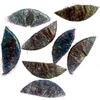
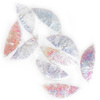
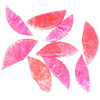
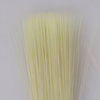
( number of products: 12 )Synthetic tailing fibres provide repeatable length, stiffness and colour for dry flies, nymphs, streamers and attractor patterns. Fine straight fibres support delicate tails, crimped or reflective strands add movement and light, and firmer fibres help keep a tail from collapsing around the hook.
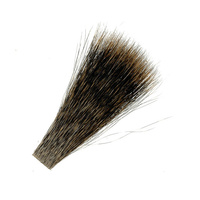

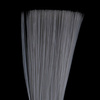
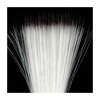

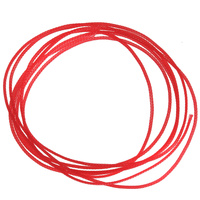
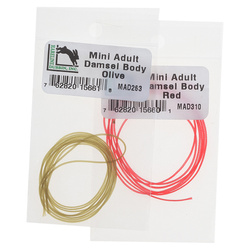















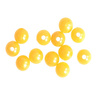
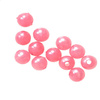
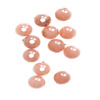

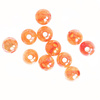
































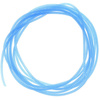
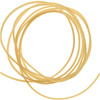


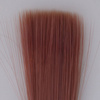
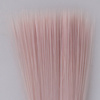




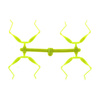
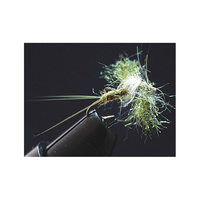
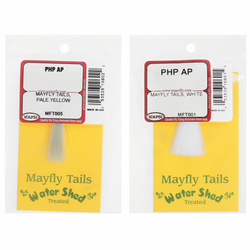


What should a tail do?
A tail can imitate insect tails, extend the body line, stabilise a dry fly, add movement to a nymph or form the rear of a streamer. The correct fibre depends on that function. A mayfly tail needs fine controlled separation; a streamer can use softer, longer and more mobile material.
Fine tailing for dry flies
Use straight, resilient fibres in small bundles. Their length should follow the pattern proportions rather than an automatic formula. Split tails require fibres that separate cleanly and retain position. Too much material creates a brush instead of distinct tails and can tilt the fly.
Nymph tails and antennae
Nymphs often benefit from slightly stronger fibres that remain visible after wetting. Natural colours create a restrained silhouette; fluorescent or pearlescent fibres can add an attractor point. Avoid filling the hook gape with a thick tie-in base.
Streamer and attractor tails
Long synthetic fibres can add colour, flash and movement without absorbing as much water as some natural fur. Blend stiff and soft fibres to control fouling. Stagger the ends rather than cutting one square line, and keep the tail short enough to avoid repeated wrapping around the hook bend.
Preparing the bundle
- Select fewer fibres than the loose bunch appears to require.
- Align or deliberately stagger the ends according to the pattern.
- Measure against the hook before tying.
- Secure with controlled turns on a level thread base.
- Trim the waste at an angle so the body does not begin with a step.
Colour and optical effects
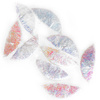
Solid colours define shape; barred fibres suggest segmentation; pearlescent or holographic fibres add intermittent reflection. A tail does not need to match the body exactly. A restrained contrasting point can remain visible without turning the whole fly into an attractor.
Frequently asked questions
Can synthetic tailing replace hackle fibres?
Often yes when the required stiffness, diameter and colour match, but the resulting appearance and taper may differ.
Why do tails twist around the hook?
They may be too long or too soft, or the casting stroke may be too abrupt. Shorten the bundle, add firmer support or adjust the leader and cast.
How many fibres should be used?
There is no universal number. Use the minimum that creates the required outline and stability for the actual hook and pattern.