
Buzzer flies for stillwater trout
( number of products: 23 )Buzzer flies imitate the pupal stage of non-biting midges, or chironomids. These insects are a major stillwater food source and are commonly represented by slim, segmented bodies with restrained thorax, wing-bud, breather or flash details. The category includes natural and brighter variations for different depths, light levels and water clarity.
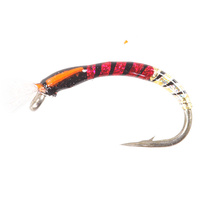
Buzzer Glass Body Ribbed Gold Red
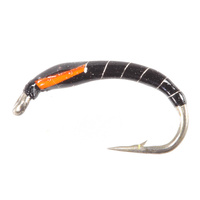
Buzzer Glass Body Black Silver Ribbed
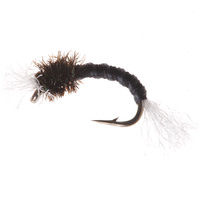
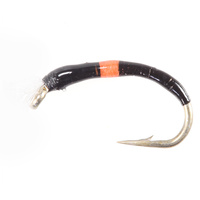
Buzzer Glass Body Black

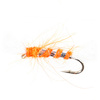
Buzzer Sugar Lump Foam Orange

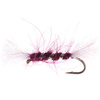
Buzzer Sugar Lump Foam Claret

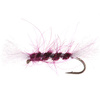
Buzzer Sugar Lump Foam Brown

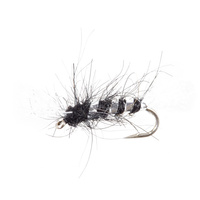
Buzzer Sugar Lump Foam Black



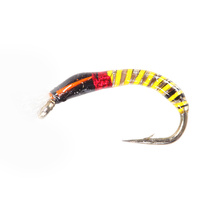
Buzzer Glass Body Yellow Olive Black
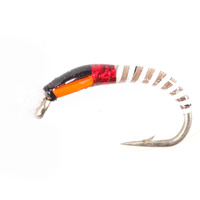
Buzzer Glass Body White Tan
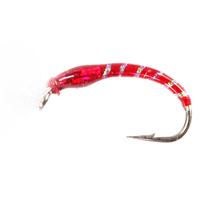
Buzzer Glass Body Ribbed Worm Red
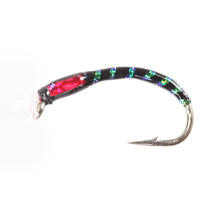
Buzzer Glass Body Olive Green Ribbed


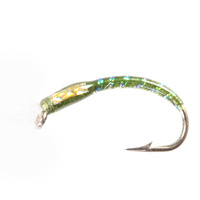
Buzzer Glass Body Olive Green
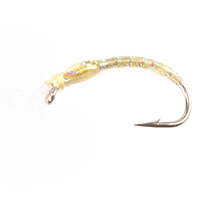
Buzzer Glass Body Olive Gold

Buzzer Glass Body Flash Back Dk. Olive

Buzzer Glass Body Flash Back Black

Buzzer Chenille Body Olive

Buzzer Chenille Body Black


Black Foam Wings Parachute Black
What does a buzzer imitate?
Chironomid larvae live below the surface and pupae rise through the water before the adult emerges. A buzzer pattern is designed around this ascending, slender form. The most useful cues are often size, slimness, segmentation and depth rather than a large amount of movement.
How to present buzzers
Buzzers can be suspended beneath a visible dry fly or indicator where permitted, fished on a slow retrieve, allowed to descend on a long leader or presented as part of a team. Wind drift and a slow lift can provide enough motion without turning the pattern into a fast-moving lure. Takes may register as a pause, a tightening of the line or a small movement at the indicator.
Choosing weight and depth
- Unweighted or lightly dressed buzzers suit the upper layers and slow descents.
- Bead-head patterns reach a chosen level more quickly and can help organise the depth of a team.
- Suspended presentations hold the fly at a repeatable depth, but the leader length must suit the water and casting conditions.
- Several buzzers on one cast can test different depths where local rules allow, provided that the leader remains balanced and manageable.
Colour and detail
Black, olive, brown and claret are reliable natural starting points. Red, fluorescent cheeks, flashbacks and bright ribs add contrast rather than changing the underlying midge-pupa profile. When fish are selective, reduce size and excess bulk before assuming that a brighter colour is needed.
A buzzer is often most convincing when it moves slowly. Establish the feeding depth, keep contact with the cast and let small changes in wind, lift and pause do more of the work than an aggressive retrieve.