
Fly Patches for Drying and Changing Flies
( number of products: 4 )A fly patch keeps recently used and frequently changed flies accessible while they drain and dry. Foam, slit-foam and pin-compatible designs can be attached to a vest, pack or other fishing equipment. A patch is a temporary working surface, not a replacement for a closed fly box.

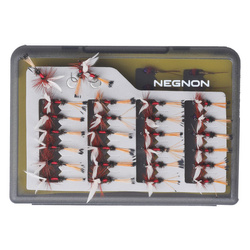

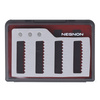

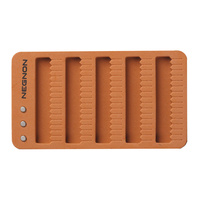




What is a fly patch for?
During fishing, a removed fly is often wet and difficult to return immediately to a compartment. A patch provides a visible place to set it aside, allows air to circulate and keeps a small working selection close at hand. It is also useful when changing repeatedly between dry flies, nymphs and streamers.
Foam and slit-foam designs
Conventional foam accepts the hook point directly. Slit or channel foam holds the bend or shank without repeated puncturing of the same area. The better choice depends on hook size and how the flies are mounted. Insert the hook only far enough to hold securely; burying the point deeply slows removal and damages foam unnecessarily.
Size and capacity
A compact patch adds little bulk and suits a small rotation of flies. A larger surface separates wet patterns and reduces tangling, but it must remain clear of the fly line and casting arm. Capacity is determined by hook and fly size, not simply by the number of visible slots.
Attachment and position
Mount the patch where it can be reached with one hand and inspected without twisting. Check the clip, pin, hook-and-loop panel or other attachment used by the particular model. A tether or secure secondary connection is useful when the patch carries expensive flies or is exposed to brush.
Drying before storage
A patch helps air reach a fly, but dense materials, fur and foam joints can remain damp. At the end of fishing, remove the flies, rinse those exposed to salt or dirt where appropriate and let them dry fully before closing them in a box. Leaving the entire working selection permanently on an external patch exposes hooks to rain, loss and corrosion.
Hook-point safety
Orient points so that hands, line and clothing are less likely to catch them. Do not overload one spot or mix large streamers with tiny flies where they obscure each other. Replace badly torn foam that no longer holds hooks reliably.
Fly patch or fly box?
Use the patch for the current session and the box for organised transport and longer storage. The two tools complement each other: the box protects, while the patch provides fast access and a place for wet flies to wait.
Frequently asked questions
Can wet flies remain on the patch overnight?
They should be checked and dried fully first. Airflow on the water does not guarantee that dense materials or the hook eye are dry.
Does a fly patch dry a soaked dry fly immediately?
No. It supports air drying. An absorbent amadou patch or another drying method can remove water more quickly before the fly is placed on it.
Can barbless hooks fall out?
Any hook can work loose if inserted poorly or if the foam is worn. Use an appropriate slit or insertion depth and inspect retention before moving through vegetation.
For absorbent drying tools, see fly dryers and amadou.