
Stillwater and lake flies for trout
( number of products: 87 )Stillwater fly choice begins with depth and retrieve. Our lake-fly range includes buzzers for midge-pupa presentations, damsel nymphs for weed beds and margins, daddies and hoppers for terrestrial activity, and Blobs and Boobies for more conspicuous or specialised presentations.
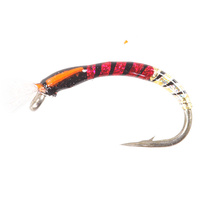
Buzzer Glass Body Ribbed Gold Red
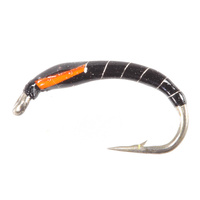
Buzzer Glass Body Black Silver Ribbed
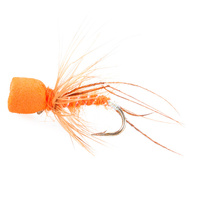
Bristol Hopper Popper Orange
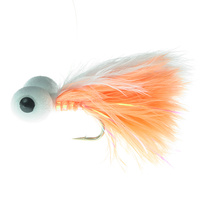
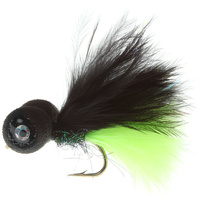
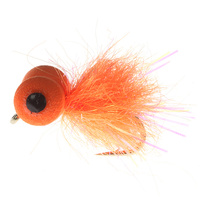
Booby Cocktail UV SLF Orange
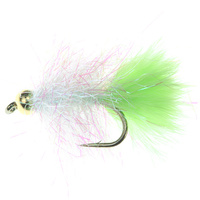
Blob Golden Bead UV Pearl and Chartreuse

Booby UV SLF Orange/Chartreuse Cocktail

Booby Yellow Eyes Coral Tail

Booby Chartreuse Eyes and Cactus White Tail

Booby Black Yellow Eyes
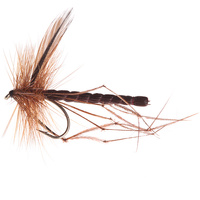
Dads Daddy long Legs Natural
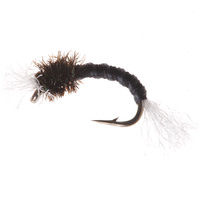
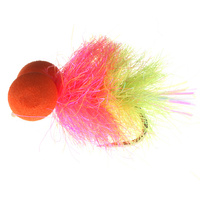
Booby UV SLF Coral/Chartreuse Cocktail
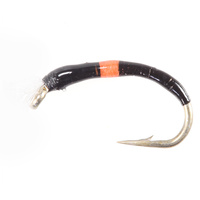
Buzzer Glass Body Black
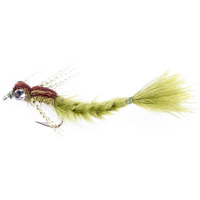
Damsel Wowen Tail Olive
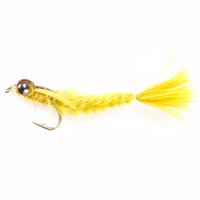
Damsel Wowen Tail Lt. Olive
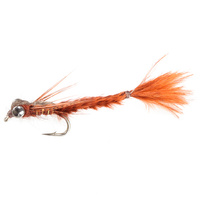
Damsel Wowen Tail Brown

Damsel Mini Pearl Ribbed Olive


Damsel Light Bright Orange

Damsel Light Bright Olive

Damsel Krystal Flash Back Olive

Damsel Krystal Flash Back Lt. Olive
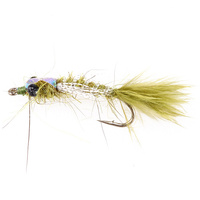
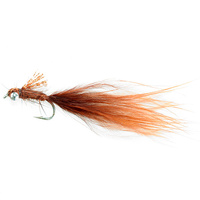
Damsel Krystal Flash Back Brown
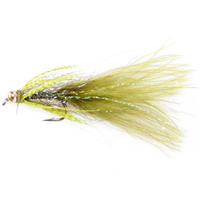
Damsel Galden Bead Olive with Krystal Flash
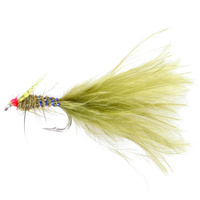
Damsel Flash Back Olive


Damsel Fl. Orange Bead Olive

Damsel Fl. Green Bead Lt. Olive

Dady Long Legs Rubber Legs Olive


Dads Daddy long Legs Orange

Dads Daddy long Legs Chartreuse

Daddy Long Legs Tan Body

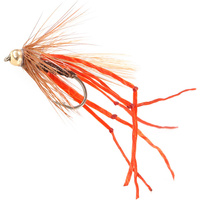
Daddy Long Legs Golden Beads Natural
How to choose a fly for stillwater
Unlike a river, a lake does not provide one continuous current to position and animate the fly. Wind, line density, leader length, the weight of the pattern and the angler's retrieve determine where the fly travels. Before changing colour, establish whether fish are feeding near the surface, through the middle layers or close to the bottom.
Natural food and searching patterns
- Buzzers represent chironomid pupae. They can be suspended, allowed to descend or retrieved very slowly through the feeding depth.
- Damsel nymphs suggest a mobile nymph associated with weed, margins and shallow structure. Their profile and movement suit slow, controlled retrieves.
- Daddies and hoppers represent sizeable terrestrial insects. Floating and subsurface versions can be useful when wind carries land insects onto the lake.
- Blobs are conspicuous attractor patterns rather than exact imitations. Colour, speed and the position of the fly within a team can all change their effect.
- Boobies use buoyant eyes or a buoyant front section. Their behaviour depends strongly on the line and leader arrangement, so check fishery rules before choosing a method.
Depth is part of the pattern
The same fly can behave very differently on a floating, intermediate or sinking line. A weighted fly on a long leader may descend slowly, whereas a buoyant fly attached to a sinking line can rise away from the line and hold near the bottom. Count-down time, retrieve speed and pauses provide repeatable controls. When a take occurs, note the depth and retrieve rather than remembering only the fly's colour.
Fishing a team of flies
Where regulations permit more than one fly, a team can cover complementary roles: a point fly may control depth, while droppers offer different profiles or movement. The number of flies, spacing and total weight must remain compatible with the leader and casting ability. A balanced two-fly cast is often more informative than an overloaded team that tangles or turns over poorly.
Reading conditions on a lake
Wind lanes, shade, weed edges, drop-offs and visible insect activity are practical places to begin. Bright light and clear water may favour finer leaders and restrained patterns; coloured water or a strong ripple can make contrast and movement more useful. The aim is not to follow a fixed colour rule, but to build a presentation that can be repeated after the first response.