
Fly-Line Backing — How to Choose Strength and Capacity
( number of products: 7 )Fly-line backing is braided line wound onto the reel before the fly line. It fills the spool, increases the effective arbor diameter and provides reserve line when a fish runs beyond the fly line. It is neither fly line nor running line, and the correct amount cannot be chosen from packet length alone.
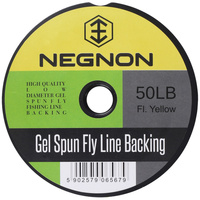
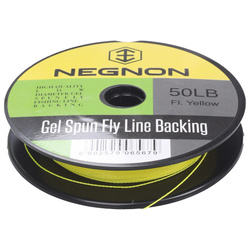
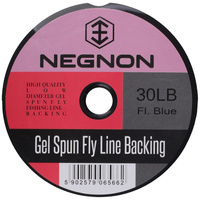
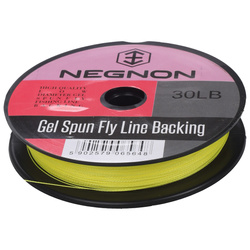
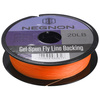
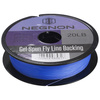
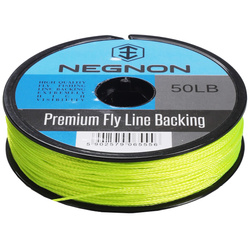
The range includes conventional backing and thin gel-spun backing in 20, 30 and 50 lb strengths. Match it to reel capacity, fly-line bulk, target species and the reserve you genuinely need.
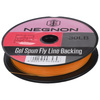
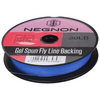

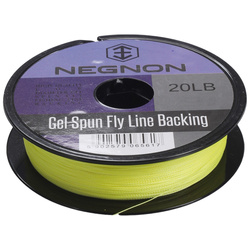
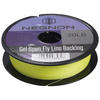

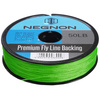

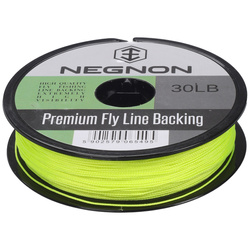

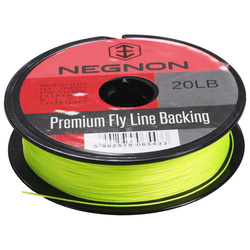

Where does backing sit in the setup?
Backing connects the reel spool to the rear of the fly line. One end is secured to the spool, the backing is wound on under even tension, and the other end is joined to the fly line. During normal casting it remains on the reel. It leaves the spool only when a fish runs beyond the length of the fly line.
Backing also fills unused spool volume. Without it, a standard fly line may sit deep on the spool in tight coils. The right amount brings the line closer to the rim, increasing the effective retrieve per turn, while leaving enough clearance for free rotation.
20 lb, 30 lb or 50 lb?
The pound rating describes nominal breaking strain. It does not specify diameter or length, and two 30 lb backings can occupy different amounts of spool space.
- 20 lb: a common choice for light and medium freshwater outfits where extreme loads are unlikely and capacity matters.
- 30 lb: adds reserve strength for heavier outfits, larger fish and demanding use.
- 50 lb: intended for high-load applications and powerful fish; its diameter and the reel's capacity still need to be checked.
Consider the complete system. Very heavy backing does not strengthen the tippet knot or fly-line core, while additional diameter may reduce the length that fits the reel.
Conventional backing and gel-spun backing
Conventional braided backing is generally straightforward to handle, knot and level on the spool. Gel-spun backing provides high strength at a small diameter, so more reserve can fit into the same capacity.
The smaller diameter also needs care. Thin material can cut into loosely wound layers, can be uncomfortable or hazardous against bare skin under load, and requires knots suitable for a slick braid. Never grab or wrap moving backing around a hand or finger.
How much backing should be loaded?
Begin with the reel manufacturer's capacity for the relevant fly-line size and backing strength. Treat it as a guide because fly lines of the same AFTMA class can have very different volume. A bulky pike taper occupies more space than a thin Euro-nymphing line.
The most reliable workshop method is to assemble the system in reverse on a spare spool. Wind on the fly line first, then add backing until a safe margin remains below the rim. Transfer the complete system to the fishing spool so the backing ends up underneath. Allow for knots and for less-than-perfect hand winding.
Do not fill to the reel frame. Wet, unevenly retrieved or dirty line can build up locally and rub, even if a neatly loaded dry line appeared to fit.
Connections at the spool and fly line
The arbor knot must hold on the spool surface, while the backing-to-line connection should pass through the guides without catching. The correct connection depends on backing diameter, braid construction and whether the fly line has a factory loop.
Where suitable, a secure loop in the backing can join the line's rear loop. A line without a loop requires an appropriate knot or compatible connection. Test every joint under firm load before fishing and confirm that the fly line has not been wound on backwards.
Inspection and care
Backing that rarely leaves the spool still deserves periodic inspection. After saltwater use, rinse the outfit according to reel and line manufacturer guidance. Check the braid for fading, abrasion, flattening and damage near the fly-line connection.
Allow wet backing to dry before long storage. When rewinding, spread it evenly under steady, moderate tension; loose layers make it easier for thin braid to bury itself when suddenly loaded.
Frequently asked questions
Does backing increase casting distance?
No. The fly line, and in some shooting systems the running line, travels during the cast. Backing is spool fill and reserve line for the fight.
Must I use the exact backing length stated for the reel?
No. Capacity figures are estimates based on a particular fly line and backing diameter. The actual amount depends on the volume of your line and the clearance left below the reel frame.