
Hackle pliers for fly tying
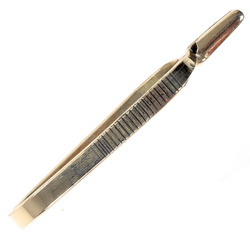
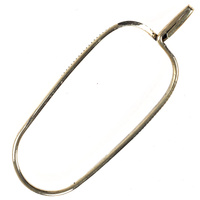
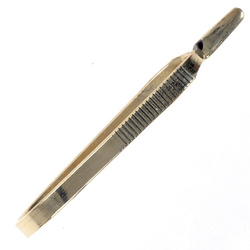
( number of products: 16 )Hackle pliers hold a feather or another tying material securely while it is wound around the hook shank under controlled tension. They are useful not only for cock hackle and CDC, but also for biots, quills, micro chenille, tinsel and fine wire. This category includes traditional spring pliers, rotary and finger-ring designs, soft-jaw models and compact Micro tools for the smallest flies.







What are hackle pliers used for?
The primary purpose of hackle pliers is to retain the free end of a material throughout successive turns around the hook. A secure grip reduces slipping, while a comfortable handle helps the tier control fibre angle and winding tension. This matters when forming the even collar of a dry fly, a mobile soft hackle, a palmered streamer body or a segmented body made from a biot or quill.
Types of hackle pliers
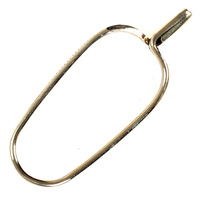
- Traditional spring pliers are simple, light and versatile. They suit everyday feathers and materials with a clearly accessible end.
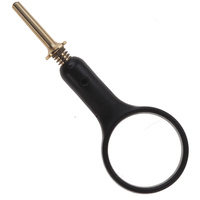
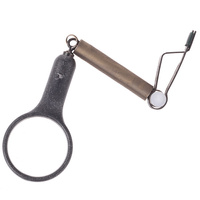
- Rotary hackle pliers allow the hand position to change freely during winding. They reduce unwanted twisting and make longer hackles easier to place.
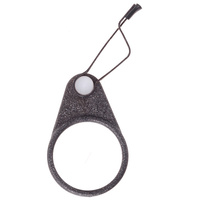
- Finger-ring designs are guided directly by a finger, providing useful tension feedback and a natural range of movement.
- Rubber-faced or high-friction jaws help retain smooth and delicate materials without excessive clamping pressure.
- Micro or Midge versions have a smaller gripping end for small hooks, short feathers and precise patterns.
- Biot pliers make narrow strips easier to hold and help the tier form a controlled, segmented body.
How to choose the right model
Small dry flies and fine feathers favour a compact plier with a delicate but reliable grip. Larger streamers, long feathers and heavier materials are usually easier to handle with a standard or rotary model. If one tool will be used for several materials, consider jaw size, opening method and freedom of movement as well as the way the handle rests in the fingers.
It is worth testing the grip on the waste end before winding. The plier should retain the material without cutting it or crushing a delicate feather stem. The right design does not replace sound tying technique, but it makes even, controlled turns considerably easier to achieve.