
Fly-Tying Material and Tool Kits
( number of products: 5 )A useful fly-tying kit is organised around a purpose: learning the basic operations, tying one family of flies or assembling the essential tools. Compare the actual contents with the patterns you intend to tie rather than choosing by the number of pieces alone.


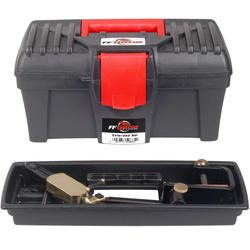

Three main types of fly-tying kit
- Material kits: coordinated hooks, beads, thread and body, wing or tail materials for a particular fly family.
- Tool kits: a vice and/or the core hand tools required for tying and finishing.
- Starter kits: tools and materials combined to introduce the complete sequence.
Dry-fly kits
A dry-fly set should support light, correctly proportioned patterns. Useful contents include suitable light-wire hooks, fine thread, restrained body material, tailing and wing or hackle appropriate to the patterns covered. Excess material quickly makes a small dry fly too bulky.
Nymph kits
Nymph sets commonly combine stronger hooks, beads or other weighting components, thread, dubbing, shellback and ribbing. Check that bead and hook combinations are compatible and that the kit indicates the intended fly sizes.
Streamer kits
A streamer set may include longer hooks, chenille or body materials, mobile hair or feather, flash and eyes. Match the scale to the line and target fish. A collection designed for small trout streamers will not automatically suit large predator flies.
What to check before choosing
- Read the component list rather than relying on photographs.
- Check whether a vice and tools are included or required separately.
- Confirm that hooks and beads are compatible.
- Identify how many complete fly patterns the materials support.
- Check whether instructions, recipes or reference images are supplied.
- Decide whether replacement components can be bought individually.
A kit or individually selected tools and materials?
A kit reduces the number of decisions at the beginning and keeps materials compatible. Individual selection offers more control when the flies, hook sizes and preferred tools are already known. Many tiers begin with a focused kit, then replace frequently used components with full-size packs.
What a kit cannot provide
No kit removes the need to learn thread tension, proportions and material handling. Begin with a small number of patterns, tie several copies and compare them after wetting. Consistency is more useful than moving immediately to a different pattern after every fly.
For the broader selection, return to fly-tying materials and tools.